Not all lubricated switches are necessarily quiet switches.
A silent switch isn't by default a smooth switch.
The two can be combined as both can enhance the look of a mechanical keyboard. Inside the switch, however, they have different issues to address.
Lubrication primarily regulates the friction between the stem, housing and spring in motion. The impact of the stem bottoming out and of it coming back up is dealt with by a silent mechanism.
Good Lubed Silent Switches do both of these, rather than relying on the lubricant to do everything.
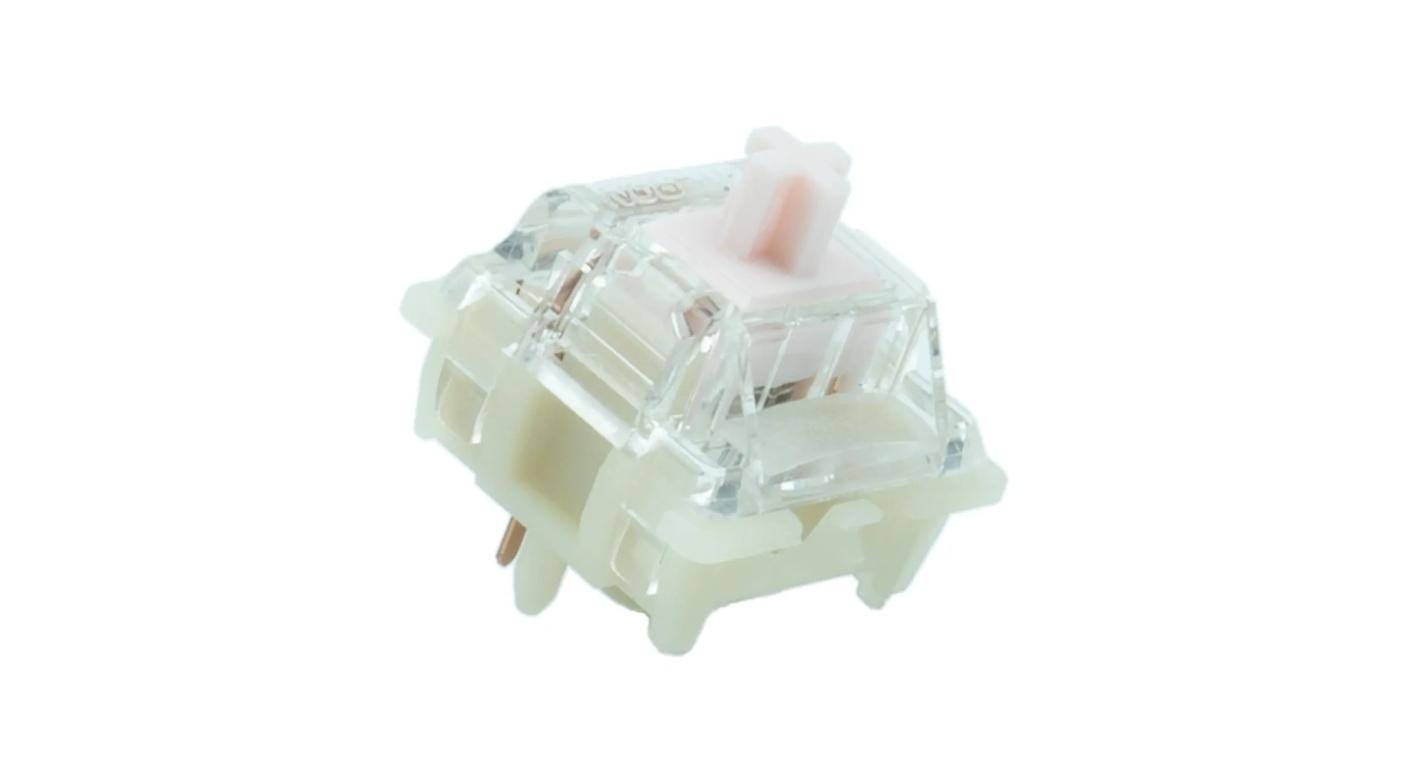
Gateron does not actually mention the pre-lube in its guide to factory switch lubrication, but it says that it is used to diminish friction, scratching noise and unwanted movement noise, and to ensure consistency across the keyboard.
There are different noises – lubrication and damping solve them.
Listen closely to an ordinary mechanical switch and there is more than one sound.
Traveling may cause a slight scratch. Small mechanical noises may be introduced in the spring. There are two much stronger events – bottom out and top out.
Lubrication is of the greatest benefit in motion.
Silent structures will be most valuable at impact.
That's why lubricating the standard linear switch with a little more oil will not make it "silent”. The stem still experiences mechanical limits.
On the other hand, adding damping to a poorly controlled switch does not necessarily take away all the rough sensation of travel.
Quietness and smoothness of the movement should be combined with softness of impact.
|
Noise / Feel Source
|
Factory Lubrication
|
Silent Damping
|
|
Stem / Housing Friction
|
Main Effect
|
Limited
|
|
Scratch During Travel
|
Reduces It
|
Does Not Directly Solve It
|
|
Bottom-Out Impact
|
Limited Effect
|
Main Effect
|
|
Top-Out / Return Impact
|
Limited Effect
|
Main Effect
|
|
Smoothness During Travel
|
Main Effect
|
Secondary
|
|
Softened End of Stroke
|
Secondary
|
Main Effect
|
Remember, Factory Pre-Lube is not one switch, it is about 80 switches.
Careful hand-lubrication of one switch is easily accomplished.
Ninety times doing the same thing, taking about the same amount of lubricant each time, is a different task.
This is where factory lube comes in handy.
Gateron's latest KS-9 Silent 3.0 Switch Set features factory pre-lubrication and modified silent rings and damping spring rings on both sides of the stem. The dual-stage spring is also used in the series.
In the case of a person who is going to make a work keyboard, this removes an entire preparation stage:
open switch→take out components→lubricate→reassemble switch→repeat.
That's not to say that factory lube is always the better choice than hand tuning.
This includes comparison of time & consistency and not just the price of the lubricant.
Silent Rings Deal With the Hard Stops
Many mechanical keypresses tend to be loud at the extremes of stem travel.
Firm pressing of the key results in bottom-out of the moving structure. Spring force is released which pushes the stem back to the top stop.
Silent switches are used in these impact paths to insert compliant material.
Gateron's Silent 3.0 design incorporates damping spring rings on the stem and Gateron's more general description of their silent switch design says it is designed to handle both downstrike and upstrike impact noise.
This is how the feel of a silent switch comes about too.
Hard plastic stop is sharp. Damped stop can be softer.
But that's not necessarily a bad thing; just part of the trade-off for reduced impact sound.
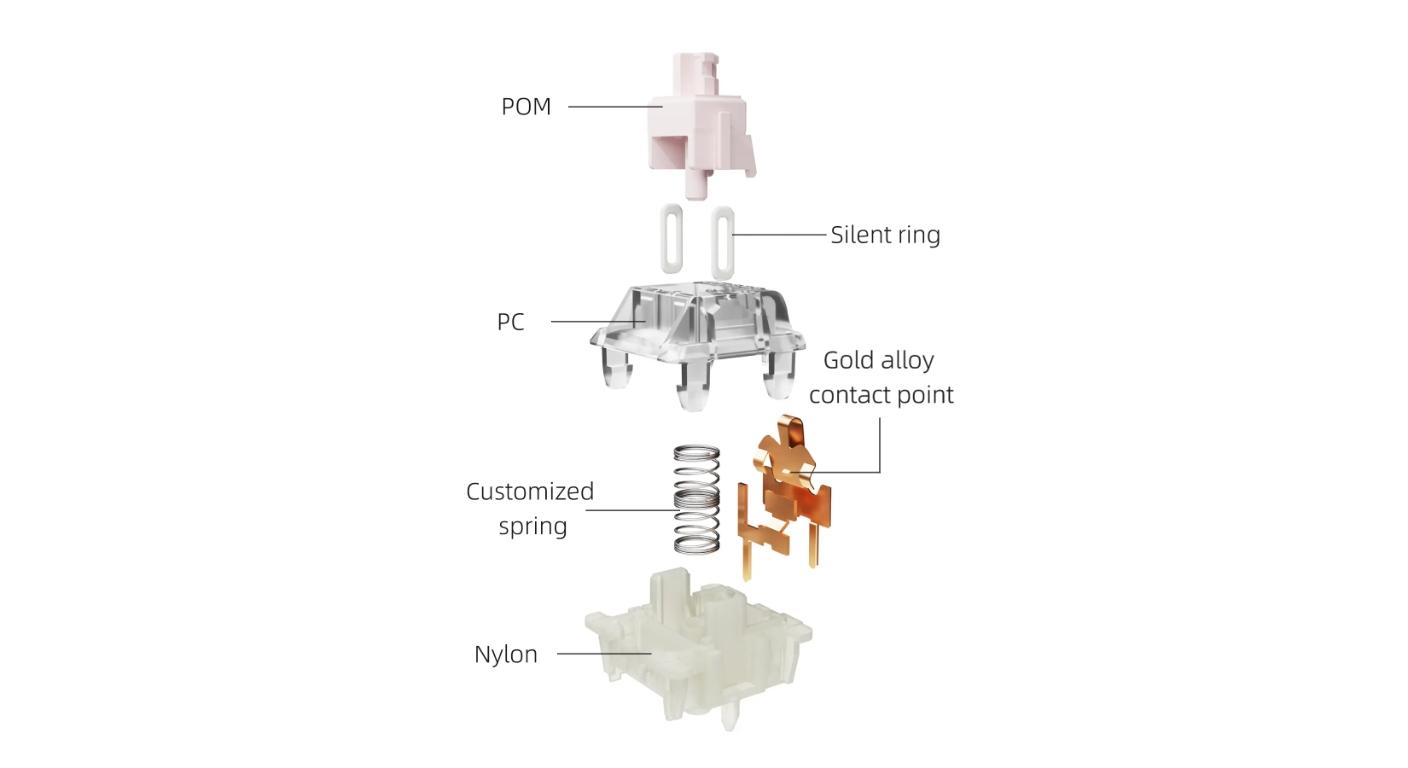
As well, Linear Silent is and remains different to Tactile Silent.
Silence is used for noise control, not the overall typing experience.
A linear silent switch does not have a deliberate tactile bump as it slides through the stroke. A tactile silent switch provides physical feedback while still trying to minimize the impact noise.
It's a difference that is clear in the KS-9 Silent 3.0 family.
It has a Pink colour and is called the Linear Silent, with a pre-travel of 2.0±0.6mm and an operating force of 45±15gf. The Purple version is the Tactile Silent, 55±15gf operating force and shorter pre-travel of 1.5±0.5mm. They both have a total travel of 3.8mm with factory lubrication.
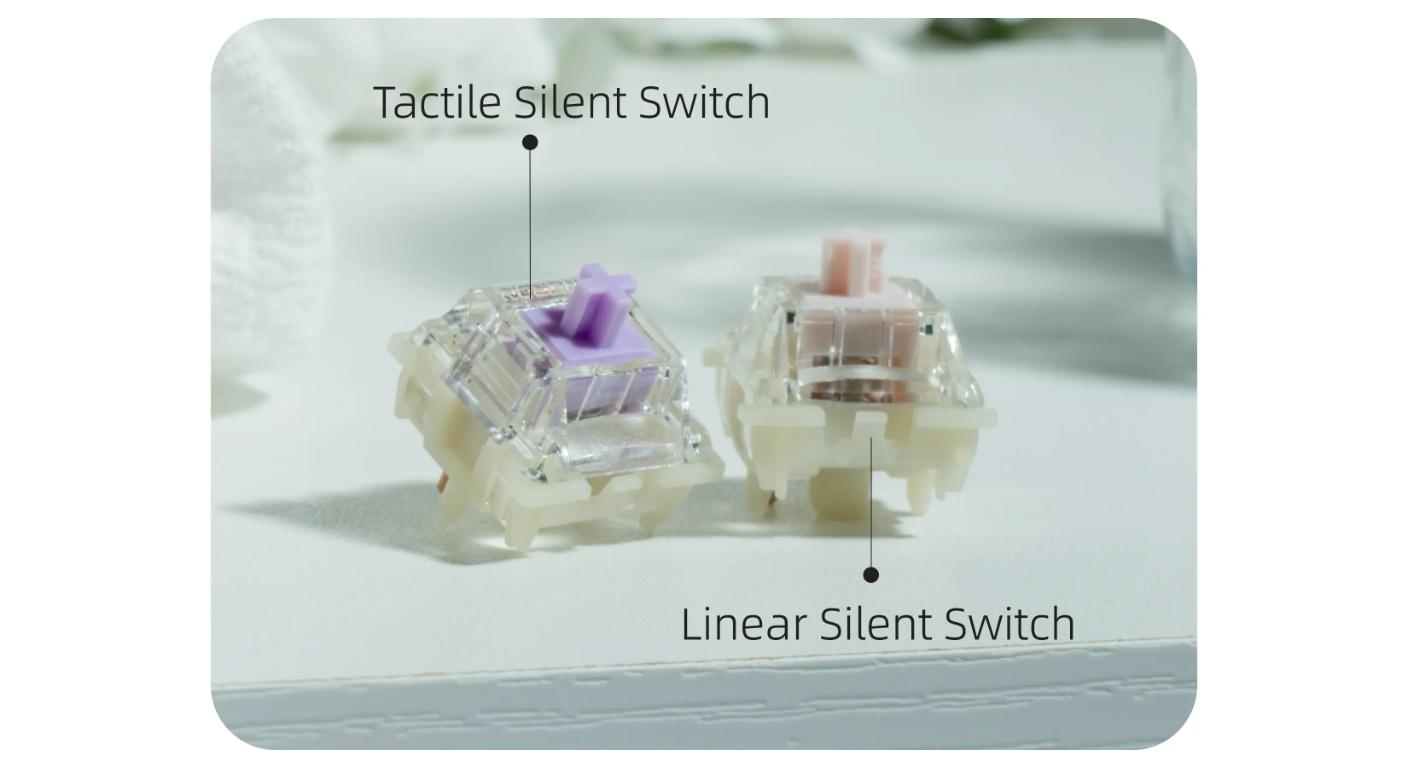
This means office users can have both “quiet” and “feedback.”
They still have to determine how their fingers will feel.
|
Switch
|
Feel
|
Operating Force
|
Total Travel
|
Silent Structure
|
Pre-Lubed
|
|
KS-9 Silent 3.0 Pink
|
Linear Silent
|
45±15gf
|
3.8mm
|
Upgraded Silent Rings
|
Yes
|
|
KS-9 Silent 3.0 Purple
|
Tactile Silent
|
55±15gf
|
3.8mm
|
Upgraded Silent Rings
|
Yes
|
|
Smoothie Pink Silent
|
Linear Silent
|
45±15gf
|
3.8±0.2mm
|
Silent Rings
|
Yes
|
|
Zero Degree Fully Silent
|
Linear
|
45±15gf
|
3.6mm Max
|
Shoulder + Bottom Mute Pads
|
Yes
|
Material Still Matters After the Noise Comes Down
When there is no more significant impact sound, differences are more noticeable.
The stability of the stems, friction and springiness of the housings increase in significance.
The Gateron Smoothie Pink Silent is totally full-POM. Gateron states it uses a POM housing and stem, has a dual stage spring, an operating force of 45±15gf and is factory pre-lubricated with the travel at 3.8±0.2mm. It also features improved quiet stem rings.
It's a good reminder that the same general concept—lubrication plus damping—can be employed in two Lubed Silent Switches, but feels different due to differences in the surrounding material and spring system.
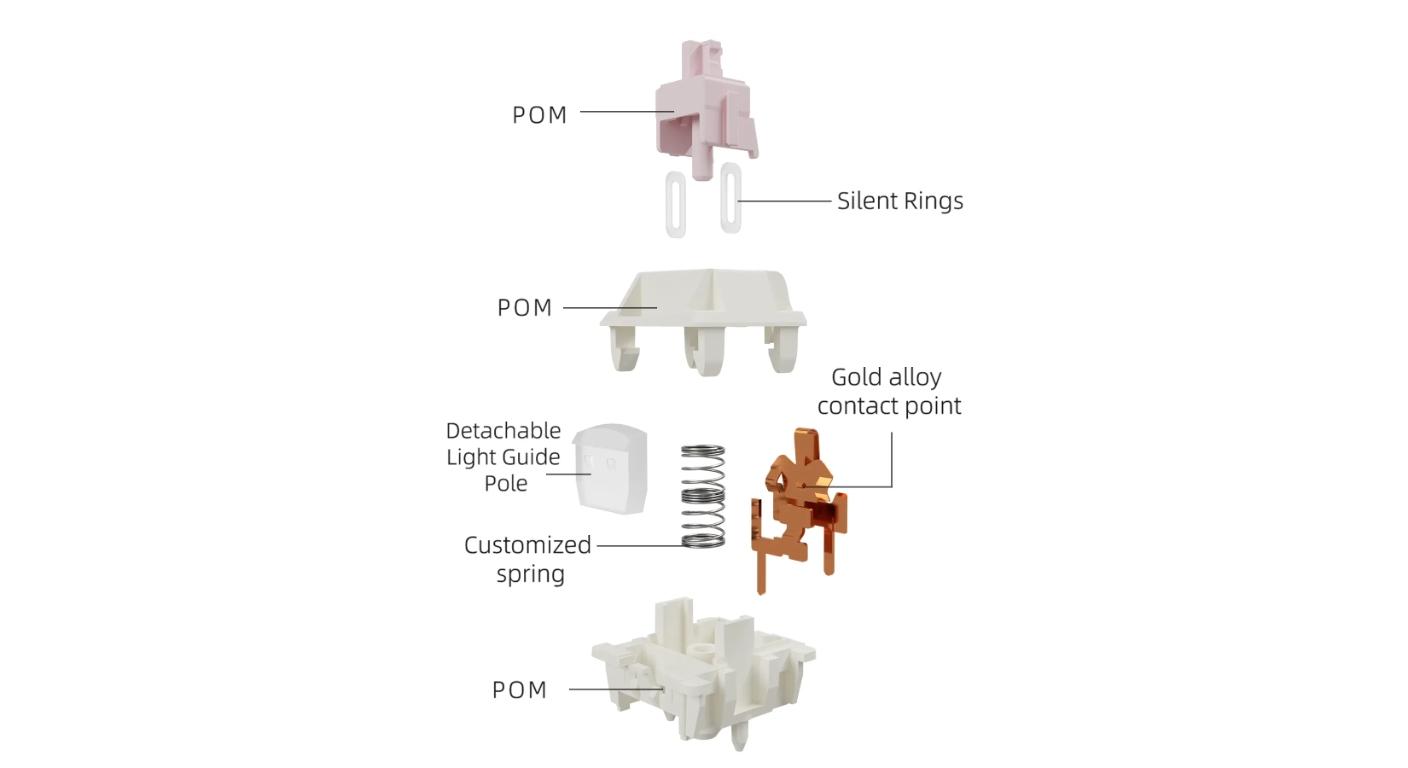
There are multiple ways to create a Silent Stop.
There are damping architectures other than silent rings.
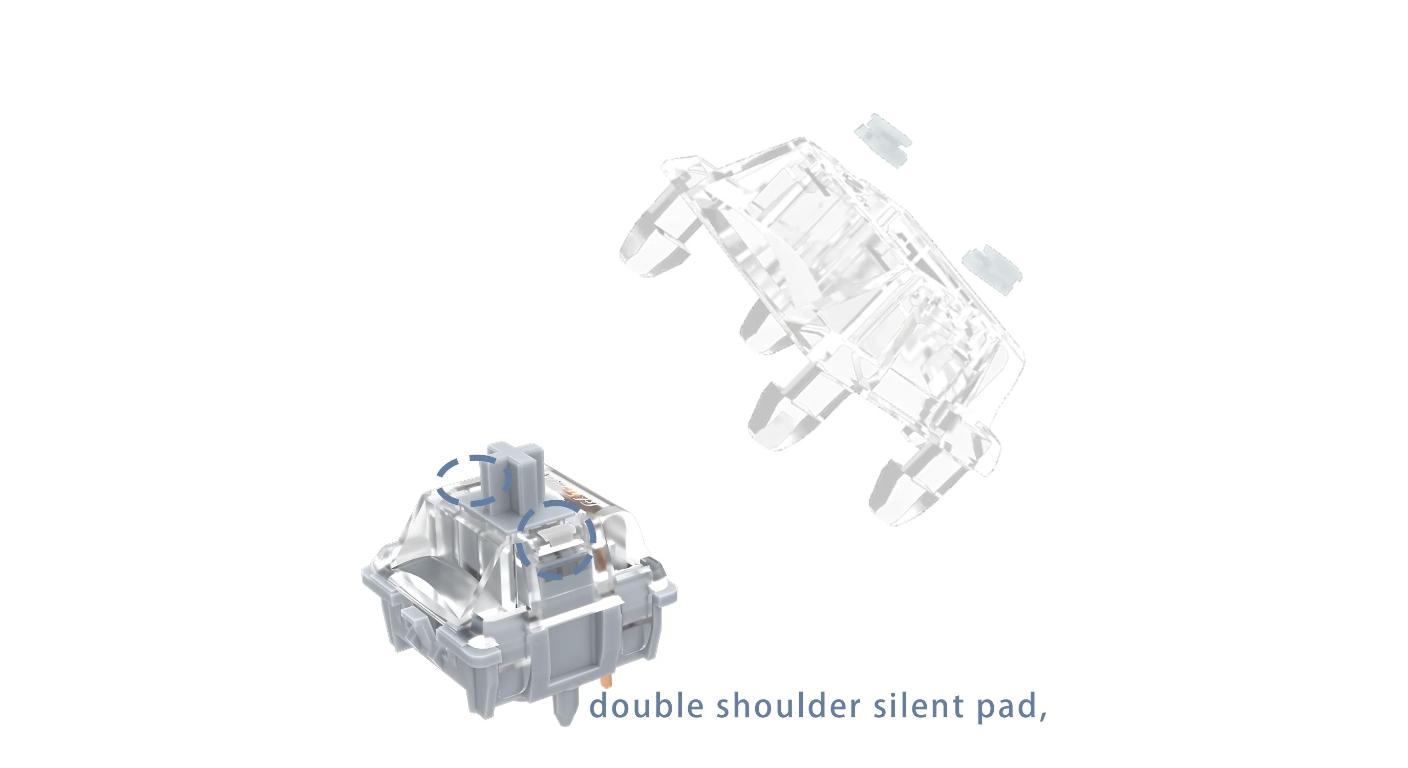
The Gateron Zero Degree Fully Silent Switch features rebound double-shoulder mute pads, four bottom-touch mute pads and double-rail stability structure. Also pre-lubed at the factory.
This distinction is important because “silent switch” shouldn't be viewed as a uniform internal structure.
The top and bottom impact points can be manipulated separately by the manufacturer.
The user is only concerned with the resulting balance of the structure in terms of:
- noise reduction;
- rebound;
- stem stability;
- bottom-out feel;
- long-session comfort.
Additional Lubricant Does Not Equal a Better Silent Switch!
One of the simplest errors to make when tuning your keyboard.
A factory-lubricated silent switch that is already "consistent" probably will not be improved by the application of more lubricant, and application of excessive lubricant will cause the switch to lose its damping structure.
Sliding and friction are controlled by lubricant.
It isn't a silent ring or mute pad.
Too much tuning can cause confusion as well about what caused the change in the switch.
One method is to install factory pre-lubed switches, and then use them as normal. Tuning for extra friction, spring or consistency is only considered if there is a specific friction, spring or consistency issue that they want to modify.
Gateron's factory-lube guidance makes the same general statement: lubrication as a corrective measure to compensate for structural flaws is not the most effective approach.
A Silent Switch Does NOT Silence the Whole Keyboard.
The Spacebar and some switches can still be among the noisiest parts of the keyboard.
That's because the switch is a single acoustic source.
Stabilizers are moved by large keycaps. Vibration is transmitted through the plate. The case resonates. The finished board can be affected by desk surfaces.
There are typing skills which matter as well.
Even the super typist expends more effort on the typewriter than does the infrequent bottomer.
Hence the need to look at Lubed Silent Switches as a source level noise control and not as a guarantee of a silent keyboard.
At that source-level reduction, it still makes a pretty big difference in the real world for an office, bedroom or shared workspace.
Select the quiet feel before the Quietest Specification.
For the majority of users there are three choices to be made.
First, choose linear or tactile feedback.
Second, decide on a force level that will feel comfortable over the course of a whole work session.
Next, check on the silent structure and factory lubrication.
That order matters.
If the switch isn't quiet and it makes you feel uncomfortable typing on it, it is not a successful switch. The keyboard with the switch that is only slightly less noticeable when you can't find it for 8 hours could be a better keyboard.
No sound is not the goal.
It's quieter without making the keyboard too noisy to use.
FAQ
Q1. What is a Lubed Switch?
These are mechanical switches that have lubrication to facilitate smoother inner working and damping structures to limit impact noise. The two features have different functions.
Q2. Does the normal switch become silent when lubricated?
No. Lubrication will help to minimize friction and some mechanical noises, but not normal bottom out and top out noises.
Q3. Do factory pre-lubed silent switches require any special treatments?
Yes, they're engineered for easy, no manual lubrication installation. Further tuning is available, but is not required and is a matter of personal taste.
Q4. Silent Linear Switches are quieter than Silent Tactile switches?
Not automatically. The only difference between the two is feedback – while linear switches move smoothly, tactile switches have a bump. Completes switch and keyboard are necessary for final sound.
Q5. Why is my Spacebar still loud with silent switches?
Big stabilized keys will provide extra keycap, stabilizer, plate and case sound. While silent switches lessen one acoustic source of sound in the keyboard, they can't take away all of the acoustic sources.



