A keyboard switch may feel smooth when pressed vertically but become noticeably rough when the force shifts toward a keycap corner. For low-profile keyboard manufacturers, this difference can expose insufficient stem guidance, excessive internal clearance, or friction concentrated along one side of the housing.
The problem is particularly relevant to Low Profile Silent Switches, where limited housing height leaves less room for guiding surfaces and damping components.
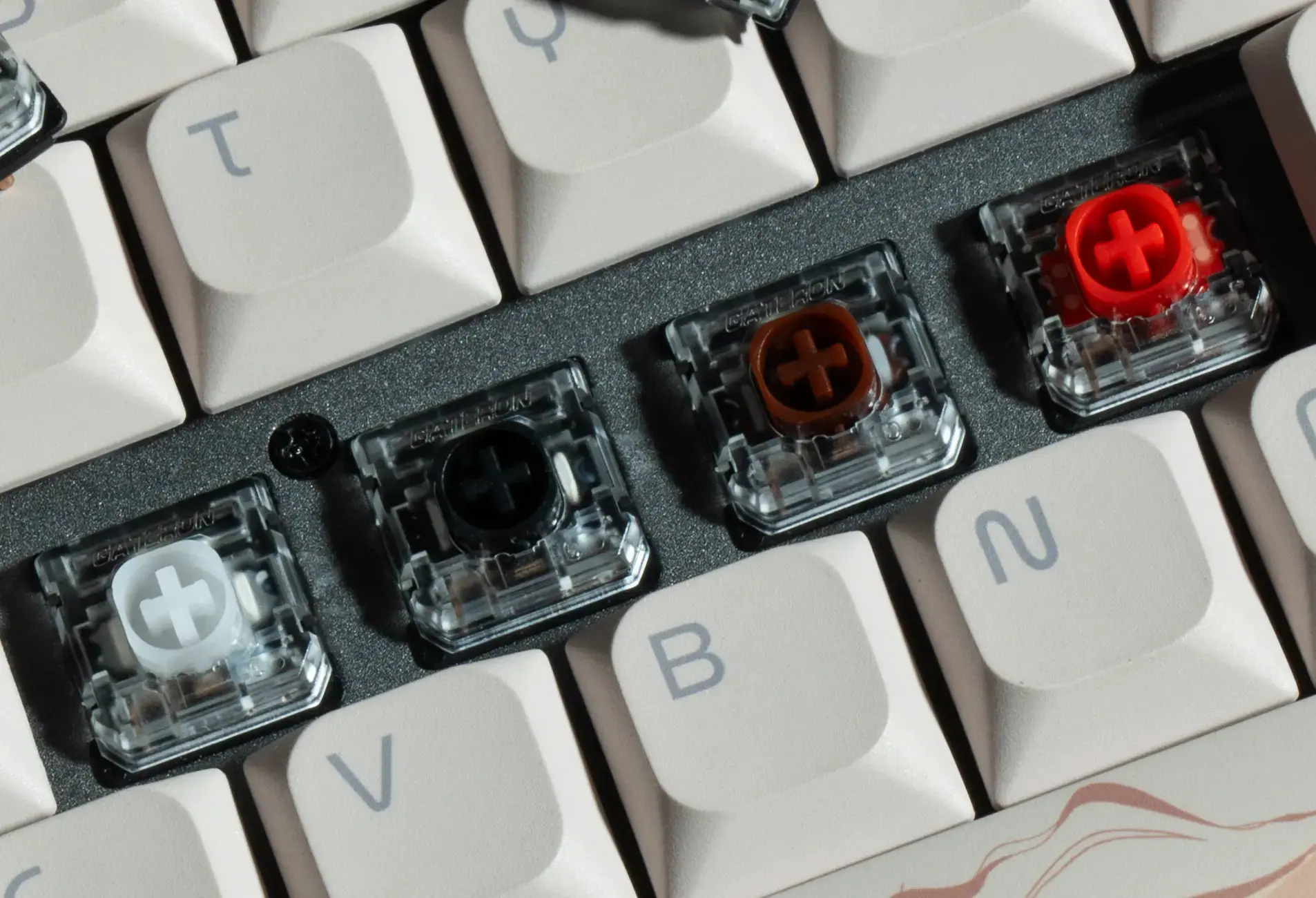
At Gateron, our KS-33 Low Profile Silent 2.0 combines dual-rail-style stem support, internal silent rings, and factory lubrication. Each addresses a different mechanical behavior. Understanding those distinctions helps keyboard designers evaluate stability without confusing reduced noise with improved guidance.
1. Why Does Stem Wobble Matter More in Low-Profile Designs?
A keycap rarely receives perfectly vertical pressure. Off-center loading creates a bending moment that tends to tilt the stem relative to its housing.
The approximate relationship is straightforward:
Tilting moment = Applied force × Distance from the stem axis
Greater keycap width or a larger finger offset increases the moment acting on the guiding surfaces.
In a conventional switch, a relatively tall housing may provide more space for longitudinal stem guidance. A shorter design must control the same off-axis forces within a more restricted geometry.
Poor guidance is manifested in the following ways:
- Lateral play: The keycap moves laterally (sideways) before the stem encounters any significant resistance.
- Uneven friction: If the stem is titled, not all of the contact surfaces of the stem would make contact with the contact surfaces of the housing, resulting in an uneven stroke.
- Return hesitation: Side loading increases the resistance to the return of the spring, causing the switch to stick or move very sluggishly.
All the aforementioned symptoms can be mechanically related to the stem and the housing and do not indicate a poor contact within the switch.
2. How Does Gateron's Dual-Rail Structure Improve Stability?
Controlling Tilt without Restricting Vertical Travel
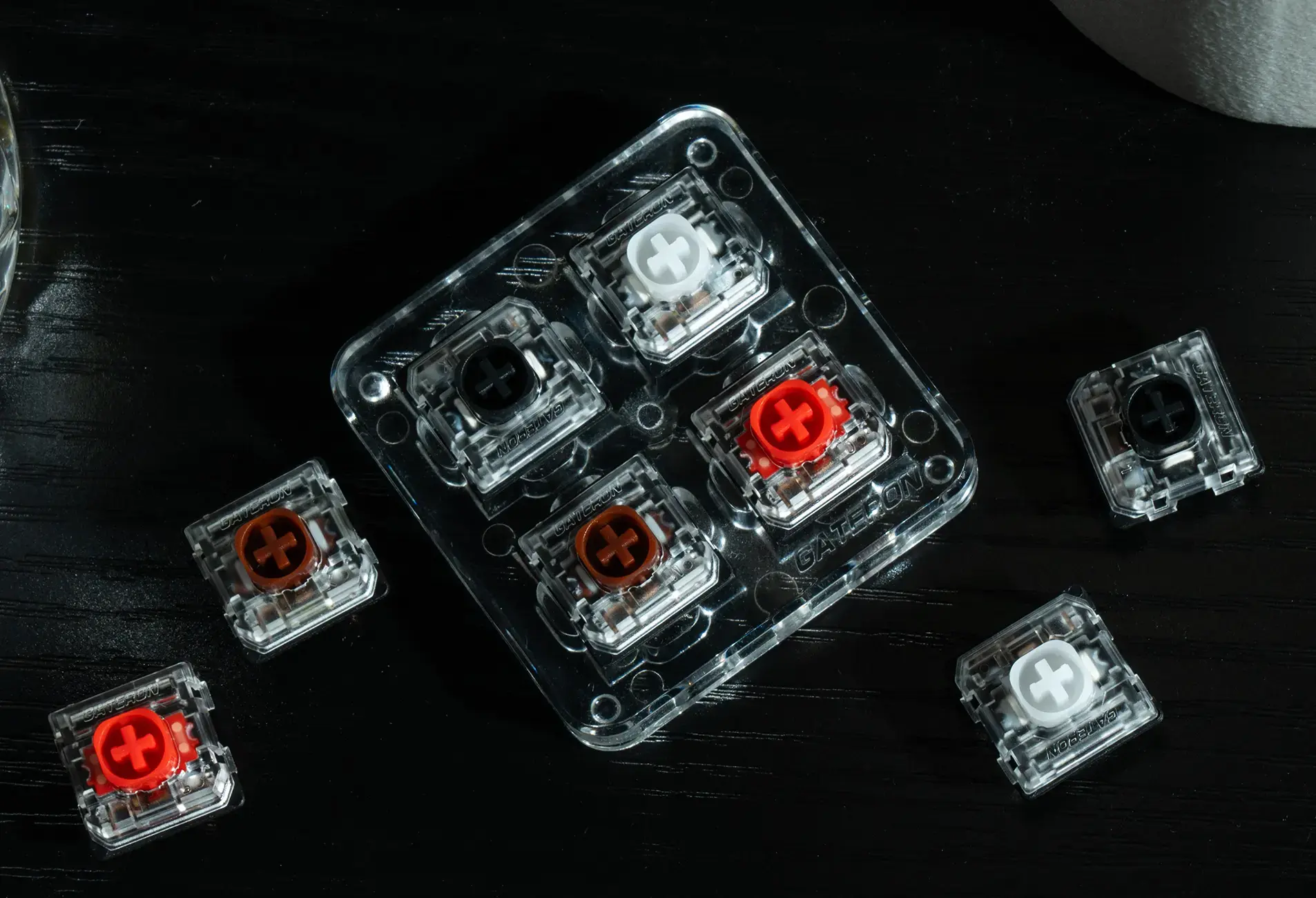
The Gateron KS-33 Silent 2.0 uses a dual-rail support structure to alleviate stem wobble.
The guiding interfaces help to constrain lateral movement and allow stem travel within its vertically defined path. In an off-center stem engagement, contact with the guiding surfaces helps constrain tilting movement.
Depending on the design of the contact guides and the stem-to-housing clearance, friction (or resistance) may increase along the contact surfaces.
A tighter fit may limit lateral play but can also increase the risk of binding.
This trade-off becomes critical when molding tolerances accumulate. A stem near the upper dimensional limit combined with a housing near the lower limit may behave differently from the opposite tolerance combination.
For production qualification, the relevant question is not whether a switch contains dual rails, but whether its guidance remains consistent across dimensional variation and repeated operation.
3. What Roles Do Silent Rings and Lubrication Play?
Stem stability, acoustic damping, and sliding friction are related but separate engineering problems.
Silent Rings Control Impact Energy
The KS-33 Silent 2.0 incorporates upgraded silent rings with damping spring rings positioned on both sides of the stem.
These damping elements reduce mechanical impact transmission during bottom-out and return. They are not substitutes for lateral guidance.
Under off-center loading, an unstable stem may still contact the housing unevenly, even when its end-of-travel impacts are damped.
Damping compression also needs consideration. Excessive or inconsistent deformation can alter perceived bottom-out firmness and return characteristics.
Factory Lubrication Controls Sliding Resistance
Gateron supplies the KS-33 Silent 2.0 with factory pre-lubrication.
Lubricant reduces friction at the intended contact interfaces, especially when lateral loading increases local contact pressure.
Lubrication will not correct a improper guide clearance guide clearance. Uneven lubrication can cause inconsistent sliding friction. Excess lubrication in a confined space can result in drag.
For engineers assessing low-profile, silent mechanical switches, an actuation mechanism centered about the axis is not sufficient. Measurement of the forces and displacements in a system off-axis provides a better indication of the interaction between guide and lubrication.
4. How Do Housing Materials Affect Long-Term Stability?
The KS-33 Silent 2.0 uses a POM stem, clear PC upper housing, and nylon lower housing.
Each material used in the construction of the switch affects long-term stability, dimension and friction.
|
Material
|
Property
|
Consideration
|
|
POM stem
|
Slides with low-friction
|
Wear, guide dimensions and surface finish
|
|
PC upper housing
|
Relatively rigid and dimensionally stable thermoplastic
|
Molded fit and alignment
|
|
Nylon lower housing
|
Tough engineering thermoplastic
|
Moisture absorption and dimensional variation
|
|
Lubricated interfaces
|
Lower sliding friction
|
Distribution and retention of lubricant
|
Nylon can absorb moisture from the environment, and become unstable in long-term applications. Differences in the thermal expansion coefficient of components can lead to changes in operating clearances.
Effects of these can lead to switch failure, however in the presence of proper material and environmental conditions, long-term stability of the switch in keyboard applications can be ensured.
5. How Should OEM Buyers Verify Stem Stability?
A useful qualification process separates switch-level behavior from movement introduced by the keyboard assembly.
|
Test
|
Method
|
Potential failure indication
|
|
Lateral displacement
|
Apply a defined side load at controlled stem positions
|
Excessive play or inconsistent guidance
|
|
Off-axis actuation
|
Press the same keycap at its center and specified corner offsets
|
Binding or increased actuation resistance
|
|
Force-displacement
|
Compare press and release curves
|
Friction variation or abnormal return behavior
|
|
Repeated cycling
|
Retest after defined operating cycles
|
Wear-related clearance or lubrication changes
|
|
Environmental exposure
|
Repeat measurements after specified temperature and humidity conditioning
|
Dimensional sensitivity or sticking
|
Two details can significantly affect the results.
First, measure lateral movement at defined positions along the stroke. A switch may behave differently near its rest position and close to bottom-out.
The same keycaps, mounting fittings, loading speeds and measurement points are to be used. Otherwise, it might not be stem instability.
Numerical wobble limits, allowable force variation, and cycling acceptance criteria will be determined through product-specific testing. Gateron's product literature provides no data from which the aforementioned limits may be determined.
6. What Should Buyers Check Before Selecting the KS-33?
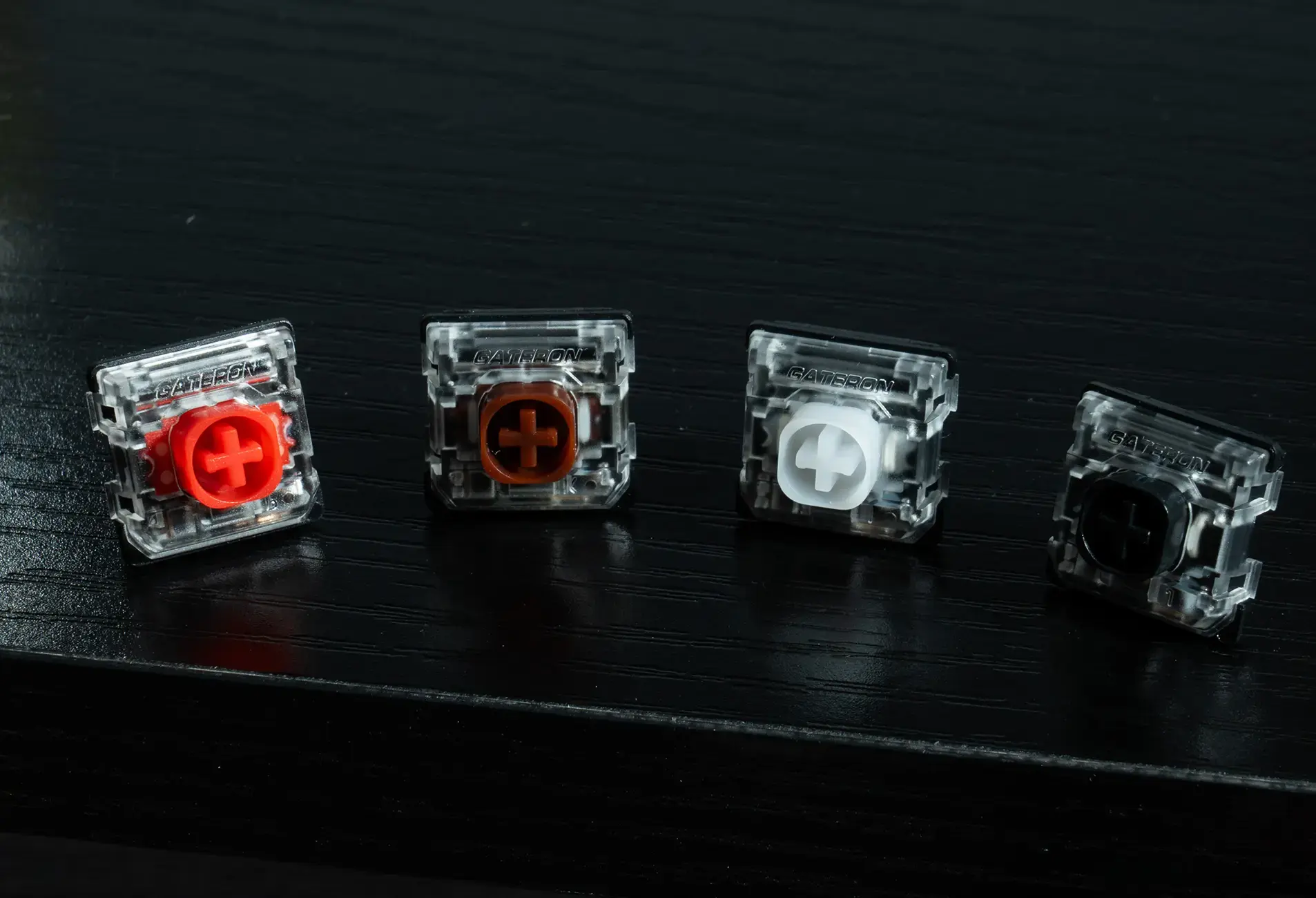
The Gateron KS-33 Low Profile Red Silent 2.0 switch has the following features:
- Operating Force: 45 ± 15 gf
- Total Travel: 3.0 ± 0.2 mm
- Additional Features: Factory pre-lubrication and SMD LED support
The stated features may influence operating characteristics of the switches but do not describe measured stem wobble.
The 3-pin configuration is not in itself a guarantee of compatibility with other low profile switch designs. Additional design elements, such as PCB footprint, sockets, and plate geometry, as well as keycap style and fit may contribute to the overall incompatibility.
Stabilized keys (e.g. larger keys) introduce factors beyond stem design and switch housing that can influence perceived side-to-side movement and stability.
As a starting point for evaluation of Low Profile Silent Switches for OEM projects, Gateron's KS-33 design provides a means to determine stem guide, stem friction, and acoustic damping.
Buyers should evaluate samples of the Gateron KS-33 Low Profile Silent 2.0 switches in their intended keyboard assembly and consider the features described before finalizing switch selection.
FAQs
Q1. How do Gateron Low Profile Silent Switches reduce stem wobble?
Gateron's KS-33 Silent 2.0 uses dual-rail-style stem guidance to restrict lateral movement and improve stability during key travel.
Q2. What causes stem wobble in low-profile mechanical switches?
Excessive stem-to-housing clearance, limited guide engagement, and off-center keypresses can cause stem tilting and lateral movement.
Q3. Do Gateron silent rings improve stem stability?
Silent rings primarily reduce bottom-out and return impact noise. Stem guidance, rather than damping rings, controls lateral stability.
Q4. Does factory lubrication eliminate stem wobble?
No. Gateron's factory lubrication reduces sliding friction but cannot correct excessive stem-to-housing clearance or dimensional inconsistencies.
Q5. What materials are used in Gateron KS-33 Silent 2.0 switches?
The switches use a POM stem, transparent PC upper housing, and nylon lower housing. Their dimensions and contact surfaces influence friction and guidance.


