Many issues with input controls have been addressed with Hall Effect keyboards.
Noise is another issue.
A magnetic switch can provide a configurable actuation and non-contact sensing and yet provide a definite sound when the stem reaches the bottom or bounces back up. That mechanical impact can be as important to a late night player as trigger speed is if he or she is sharing a working space, or is using voice chat with an open microphone.
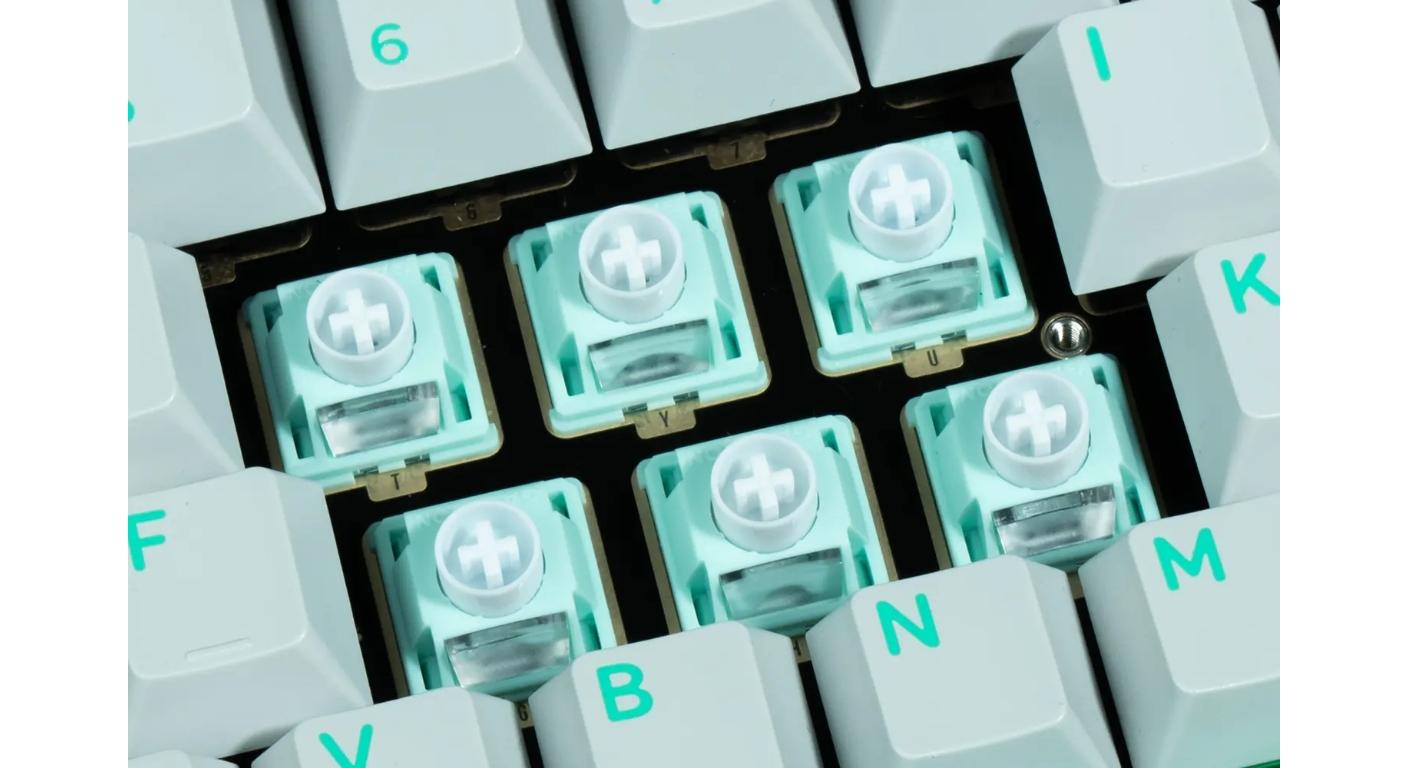
The Magnetic Jade Silent Switch Set takes a mechanical approach to the problem. Gateron's approach is to integrate damping structures around the moving stem, so as to minimize impact noise in both directions, rather than create a “silent” software mode.
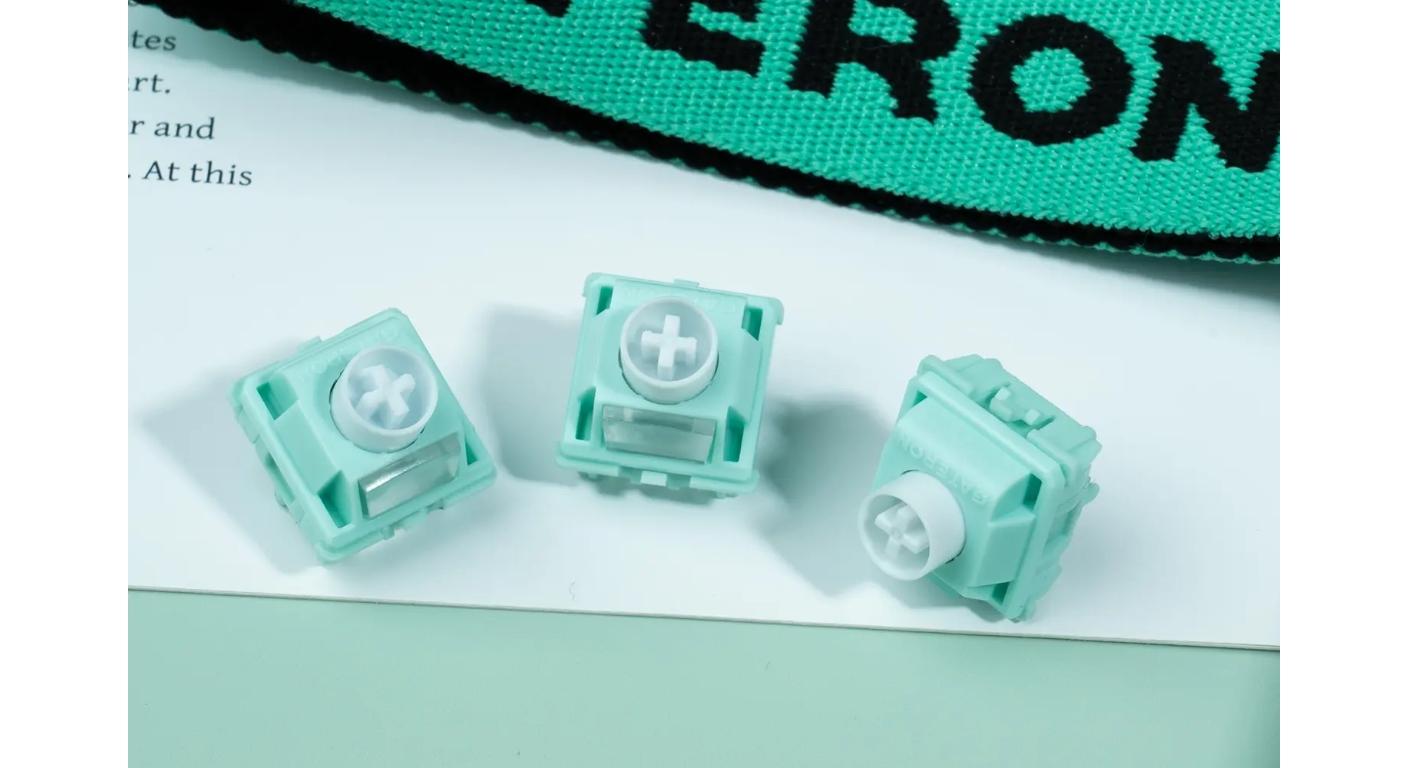
That does make this switch interesting so I'm going to discuss it as a quiet HE switch and not just another magnetic switch in a different colored housing.
Silent Damping Has to Work in Both Directions
There's more than one impact per key press.
The first time is when the stem is bottomed out. This second time happens when the spring pulls the stem back and the moving structure gets to its top position.
If you're able to stop just one of those, you still have half the problem.
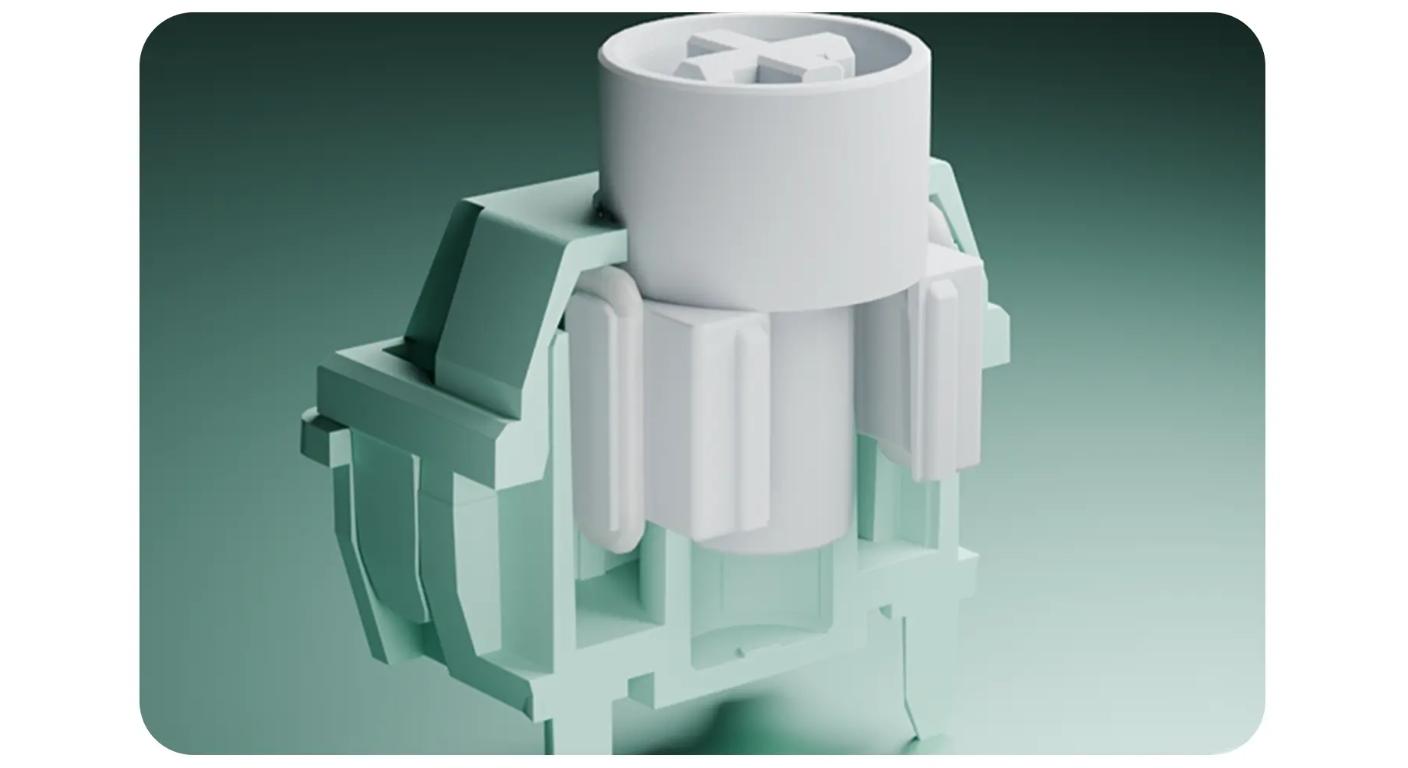
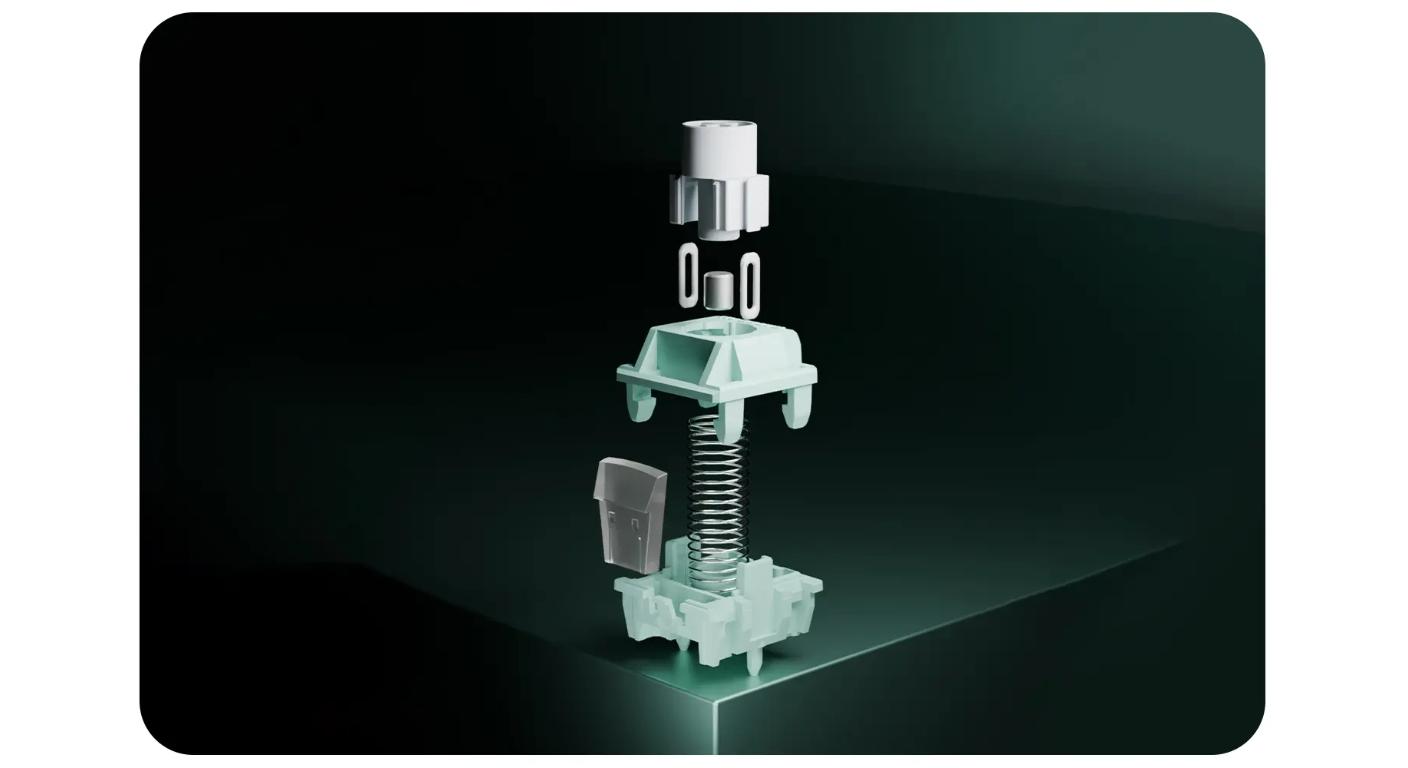
Gateron has designed the Magnetic Jade Silent to feature a dual-ring sound-dampening structure, with damping rings on either side of the stem. Also, the company explains about an irregular oval-like geometry for controlling the lateral deformation of the dampers.
That's important because there are two things a damping material must do:
- Absorb impact energy;
- Avoid excessive damping that could make the keypress feel ambiguous.
The collision in a silent switch shouldn't just make the collision softer. The stem must still return cleanly and consistently, so the switch is ready for the next input.
The Bottom-Out Experience is different with a Silent Switch
Switching from a regular Magnetic Jade type switch comes with more than a change in volume.
Damping has an influence on the physical end of the stroke.
With a conventional hard bottom-out, there is a hard mechanical stop. A damped design helps to absorb some of this impact, and the end of the press can be less abrupt.
Whether that feels better or worse is a matter of personal preference.If you're sharing a desk with someone else, the trade might be intuitively obvious. If you want the acoustic response of an HE keyboard you've gone out of your way to choose it, then an HE keyboard that's not silent might still be your preference.
This is why there are several different constructions within the Magnetic Jade Switch Series - no one acoustic profile is right for every keyboard.
|
Specification
|
Magnetic Jade Silent
|
|
Switch Type
|
Linear Magnetic HE
|
|
Initial Force
|
33±5gf
|
|
Bottom-Out Force
|
45±10gf
|
|
Pre-Travel
|
Freely Setting
|
|
Total Travel
|
3.2±0.2mm
|
|
Initial Magnetic Flux
|
125±8GS @ 1.2mm PCB
|
|
Bottom-Out Magnetic Flux
|
700±30GS @ 1.2mm PCB
|
|
Lubrication
|
Factory Pre-Lubed
|
|
Rated Keystrokes
|
≥60 Million
|
The Spring is light but the trigger is still a separate setting
The Magnetic Jade Silent's Initial Force is 33±5gf and bottoms out at 45±10gf and has a physical total travel of 3.2±0.2mm.
This is what the finger feels like.
Does not specify a single "electrical actuation point".
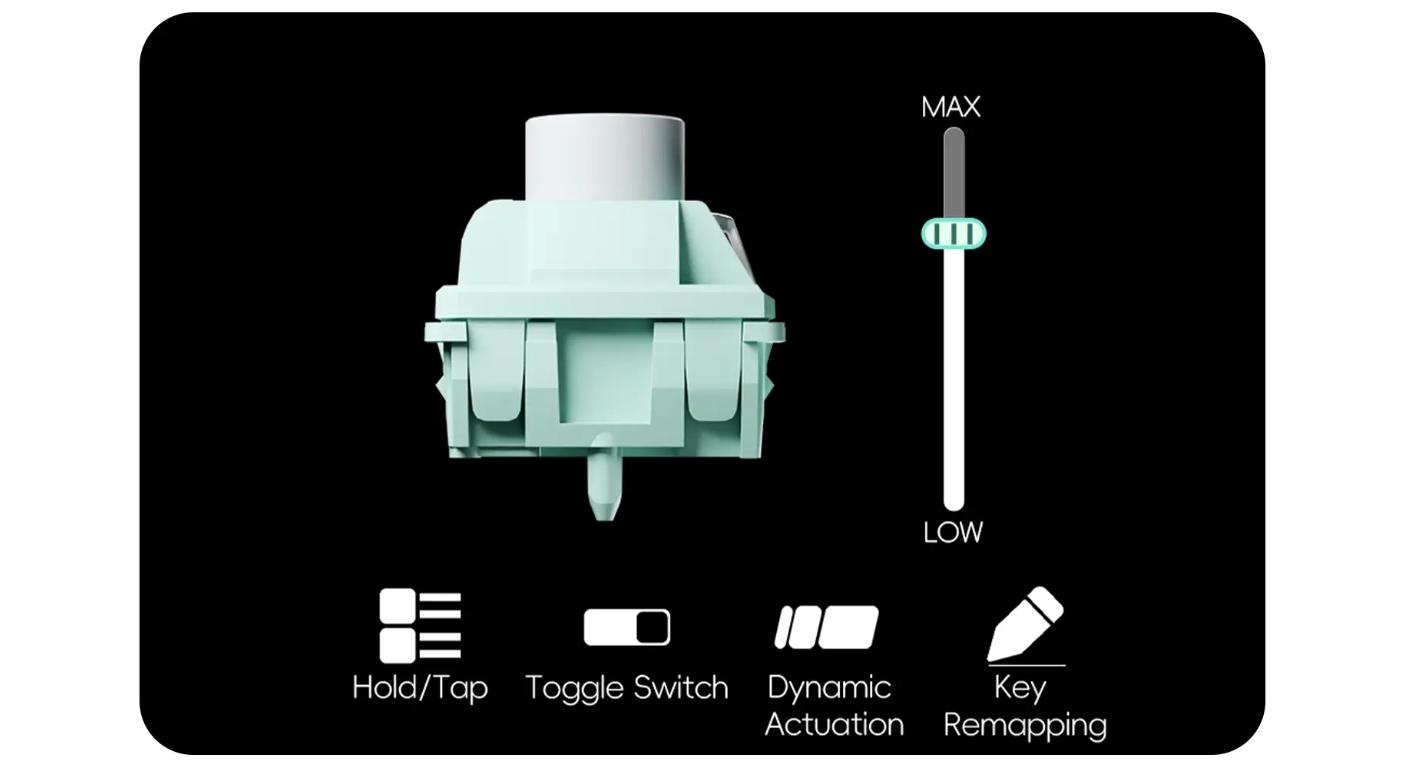
Similar to any other switch in Gateron's Magnetic Switches family, it is a Hall Effect (Magnetic Plates) switch that moves the magnetic field of the steel stem in relation to the PCB sensor. Gateron calls the pre-travel of Magnetic Jade Silent "freely settable" and "adjust by the compatible driver of the keyboard.
This is a separation that is beneficial:
HE keyboard control by driver config, spring force controls feel.
A user can thus use the same physical light switch with less aggressive actuation on normal typing keys, and more aggressive actuation when desired.
Quiet Does Not Mean Slow.
With damping it is easy to assume that:
Responsiveness has to become sluggish if material is being added to soften impacts.
This is not necessarily so.
The damping rings are based on the principle of mechanical impact. Like the mechanical switch, it is still possible to track the magnet's movement, but without the traditional electrical contact leaves of the mechanical switch. As the magnet moves vertically, the sensor reading will change, as explained in Gateron's Hall Effect.
The question at issue is thus a practical one: “Is 'silent' synonymous with 'slow'?”
Whether it is comfortable for the users repeated input, with the damping feel, spring return and HE setting.
That's something that needs to be tested, rather than inferred from the word silent.
Stem Stability is now Important when the Sound is Being Turned Down
Large mechanical sounds can be concealed by loud switches.
Quiet switches allow them to be exposed.
When the initial bottom-out, rebound impact is removed, stem movement and housing contact are more obvious components of the experience.
Gateron's solution is a cylindrical stem design which they say has all-round stability while minimizing the classic stem wobble. Stem and top housing are made from POM, a low-friction material, and the switch is factory pre-lubed.
The features are important because “silent” doesn't imply only one loud noise has been removed and another one has taken its place—scratch, rattle or loose stem movement.
The magnetic signal is still not in sync with the HE Platform.
This is where mechanical-switch habit can cause problems.
The traditional MX switches are the ones where buyers would be interested in the physical fitment of the switch on the PCB.
The addition of a magnetic switch provides an electronic sensing relationship.
The Magnetic Jade Silent has an initial magnetic flux density of 125±8GS and a bottom out magnetic flux density of 700±30GS when measured with a 1.2mm PCB.
Those are not just trimmings. The Hall sensors on the keyboard must be able to "read" the position of the magnet throughout the stroke.
So, don't purchase the switch just because it looks like it is the right size for the keyboard.
Make sure that the magnetic switch type is supported by the keyboard manufacturer and then recalibrate the keyboard if the software that it is used with requires this after changing the switch type.
|
User Situation
|
Silent HE Priority
|
Reason
|
|
Late-Night Gaming
|
High
|
Reduces repeated impact noise
|
|
Shared Office / Dorm
|
High
|
Less disturbance to nearby users
|
|
Streaming / Voice Chat
|
High
|
Reduces keyboard noise near microphones
|
|
Dedicated Gaming Room
|
Medium
|
Silence may be less important
|
|
Sound-Focused Enthusiast Build
|
Depends
|
Damping changes bottom-out character
|
|
Lower
|
Sensor/firmware capability may matter more
|
RGB hasn't been forgotten.
Silent builds are occasionally considered as simply plain office keyboards.
This doesn't need to be the case.
Magnetic Jade Silent also features a removable light-guide diffuser that Gateron uses to diffuse light evenly around the light.
In an HE gaming keyboard this is especially important as you don't have to sacrifice an illuminated setup if you want to have less mechanical noise.
If you don't like strong RGB, the diffuser may not be a reason to choose this switch.
For those who do want to use lighting it does however, indicate that the acoustic design is not the only element the keyboard does not neglect.
The use of Magnetic Jade Silent is most effective in areas where it is most needed.
There is an easy explanation to make the strongest case for this switch.
The User already desires Hall Effect control, but the default noise level of an enthusiast gaming board isn't appropriate for the environment.
Typical examples include:
- Playing games in the evening around others;
- Sharing flats or dorms;
- Gaming and voice-chat setups that are close to a microphone;
- Mixed work-and-gaming desks;
- Those looking for a linear HE output that's light rather than powerful who don't care for that bottom-out noise.
In those cases, "Silence”is not just another option.It addresses an environmental problem.
Those who are not sure about the damped feel can try out various magnetic designs first using Gateron's Magnetic HE Switches Tester. Multiple types of Hall Effect switches are included in the tester, allowing for comparisons of physical feel and acoustic feedback.
Final Check: Select It for the Environment – NOT Just the Spec Sheet
The Magnetic Jade Silent Switch Set is best suited if three requirements are met:
- You need Hall Effect adjustment;
- A lightweight linear press is desirable for you;
- It's real when it comes to noise from the keyboard and mouse.
However, if the only thing is the first requirement, then Gateron has plenty of alternatives as it has a broader magnetic range. The dedicated damping structure comes to the fore if all three matter.
So it's not really a question of "is Magnetic Jade Silent 'better' than another Jade switch?
A more pertinent question is:
Does decreasing bottom-out and bounce noise make your HE keyboard more liveable?
FAQ
Q1. Magnetic Jade Silent is a mechanical or Hall Effect switch?
It is a linear Hall effect switch that is magnetic. It does not need to make use of the traditional metal contacts for actuation, but needs a compatible HE sensing platform.
Q2. What is the reason for Magnetic Jade Silent being quieter than the other?
Gateron adopts damping rings to both sides of the stem, which helps to reduce bottom out and rebound impact noise.
Q3. What is the initial force of it?
According to the official specification, it has 33±5gf of initial force and 45±10gf of bottom-out force.
Q4. Is there some way to adjust its actuation point?
Yes, Gateron mentions that the pre-travel can be freely configured via a compatible keyboard driver. All this depends on the HE keyboard platform, however, available for adjustment.
Q5. Does it come lubricated in the factory?
Yes. Gateron advertises the Magnetic Jade Silent Switch Set as pre-lubricated.



