For an OEM keyboard project, Custom Keyboard Switches are not simply standard switches with a different stem color. A properly defined custom switch is an engineered component in which force, travel, materials, acoustics, electrical architecture, lighting, and manufacturing tolerances are specified around the keyboard's intended user experience.
From GATERON's manufacturing perspective, the most effective development process starts with one question: how should the finished keyboard feel, sound, and respond?
That requirement can then be translated into measurable switch specifications.
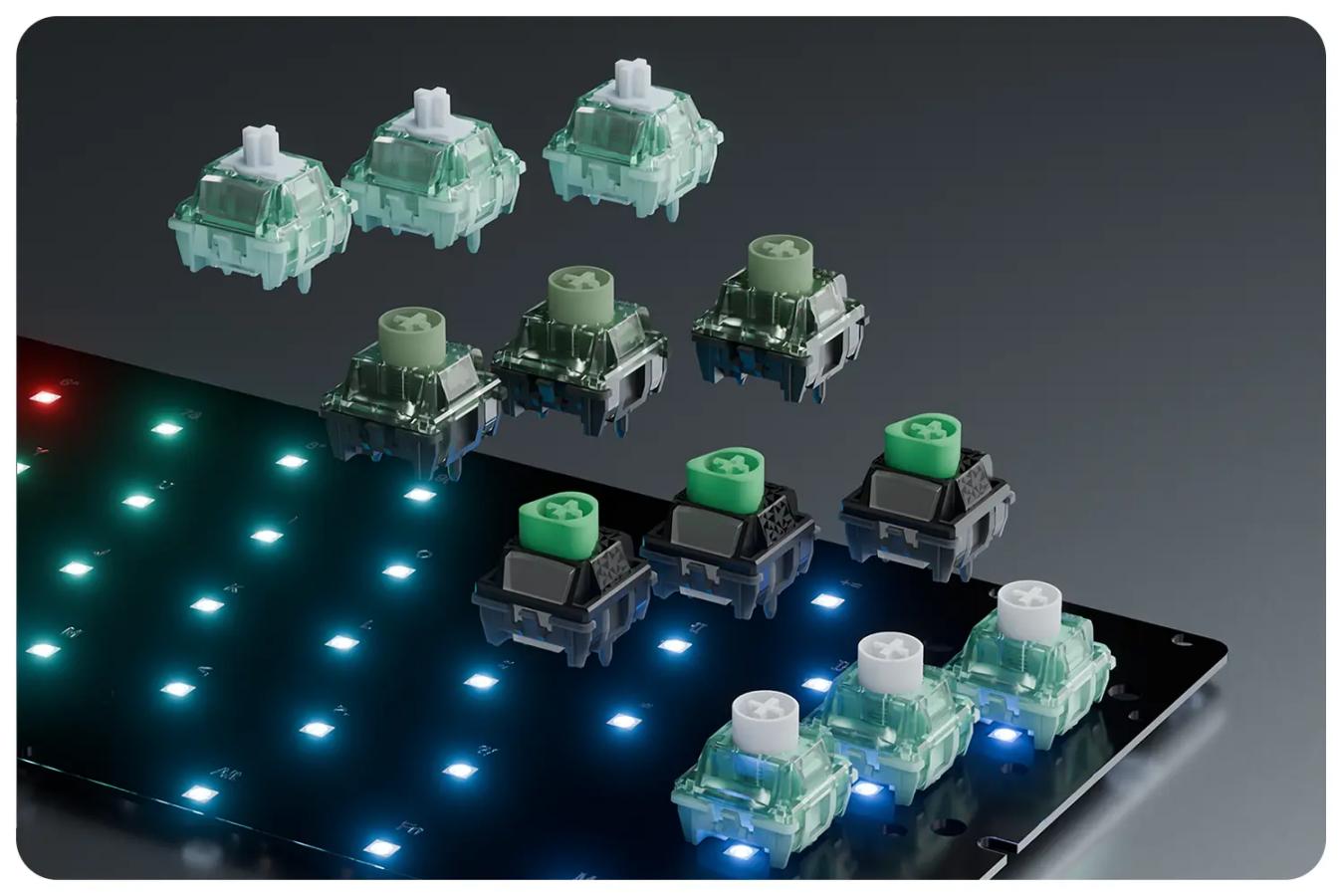
What Can Be Customized in Custom Keyboard Switches?
The main engineering variables fall into several interconnected groups.
|
Design Area
|
Variables That Can Be Defined
|
Main Impact
|
|
Switch characteristics and sensing method
|
Linear, tactile, silent, magnetic
|
Input behavior and PCB architecture
|
|
Force
|
Initial, operating, bottom-out, return force
|
Perceived weight and control
|
|
Travel
|
Pre-travel, total travel
|
Response and keystroke depth
|
|
Spring
|
Length, weight, single/dual-stage
|
Force curve and rebound
|
|
Materials
|
POM, nylon, PC, material blends
|
Friction, wear, acoustics
|
|
Acoustics
|
Stem geometry, damping, lubrication
|
Bottom-out/top-out sound
|
|
Lighting
|
Housing transparency, light guide, SMD support
|
RGB transmission
|
|
Appearance
|
Stem/housing colors, logo
|
Product differentiation
|
These variables should not be specified independently. In Custom Keyboard Switches, a change to spring geometry, for example, can alter both the force curve and return characteristics even when the nominal operating force remains unchanged.
1. Start With the Switch Architecture
OEM development normally begins by defining the switch characteristics and sensing method:
- Linear: Uninterrupted travel with no tactile event.
- Tactile: Adefined force change during travel.
- Silent: Internal damping reduces bottom-out and/or return noise.
- Magnetic / Hall Effect: Stem position is detected through changes in magnetic field rather than conventional electrical contact.
The architecture affects more than feel.
For magnetic Custom Keyboard Switches, switch design must be coordinated with the Hall sensor, magnet characteristics, PCB, firmware, calibration range, and desired actuation behavior. Adjustable actuation and Rapid Trigger are system-level functions; they cannot be specified only at the switch level.
2. Engineer the Force Curve, Not Just the Operating Force
Operating force is useful, but it is only one point on the keystroke.
A complete OEM specification should consider:
Initial Force
Resistance as the key begins moving.
Operating Force
Force around the actuation point.
Bottom-Out Force
Resistance near the end of travel.
Return Force
The spring force available to return the stem.
Spring length, preload, coil geometry, and single- or dual-stage construction can all change how resistance develops.
This matters when developing Custom Keyboard Switches because two switches rated at 45 gf can still feel substantially different during actual use.
3. Define Pre-Travel and Total Travel Together
Pre-travel measures how far the stem moves before actuation. Total travel defines the complete mechanical stroke.
Shorter pre-travel can produce a more immediate input response, while longer conventional travel may provide greater separation between initial movement and bottom-out.
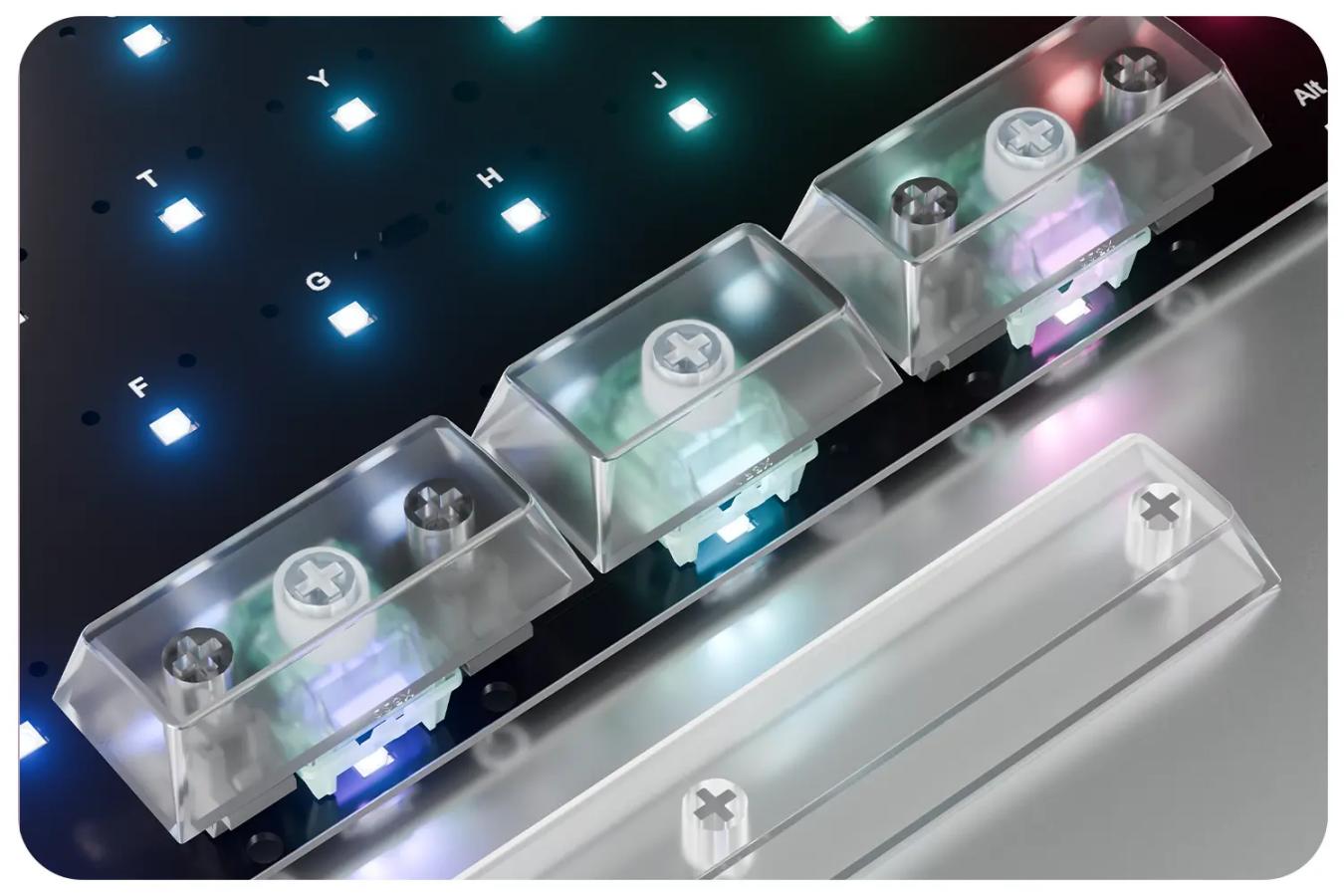
For OEM development, travel must be evaluated alongside:
- Intended typing or gaming use
- Hall Effect sensing range, where applicable
Rather than asking whether shorter travel is "better," the more useful engineering question is whether the travel profile fits the keyboard's intended behavior.
4. Material Selection Changes More Than Sound
POM, nylon, and polycarbonate are widely used in Custom Keyboard Switches, but material selection should not be reduced to labels such as "thocky" or "creamy."
Materials influence:
- Resonance and acoustic response
POM is frequently used for low-friction moving components. Nylon housings offer different mechanical and acoustic behavior, while transparent PC structures are useful where RGB transmission is important.
The final sound, however, also depends on stem geometry, housing thickness, spring, lubrication, plate, keycaps, PCB, and case construction.
5. Lubrication and Acoustic Tuning Require Process Control
For mass-produced Custom Keyboard Switches, lubrication is a manufacturing parameter, not simply a finishing touch.
OEM teams may define lubrication around:
Too little lubrication may leave unwanted friction; excessive or inconsistent application can change feel and sound across a production batch.
Acoustic tuning follows the same principle. Bottom-out sound, top-out sound, spring vibration, and housing resonance must be evaluated as a system rather than optimized independently.
A Production Example: GATERON Smoothie Linear Switch
The GATERON Smoothie Linear Switch Set provides a useful example of how several engineering parameters combine in a production switch.
|
Specification
|
GATERON Smoothie Linear
|
|
Type
|
Linear
|
|
Operating Force
|
40±10 gf
|
|
Pre-Travel
|
2.0±0.6 mm
|
|
Total Travel
|
3.6±0.2 mm
|
|
Material
|
Full POM
|
|
Spring
|
22 mm dual-stage
|
|
Pins
|
5-Pin
|
|
LED Support
|
SMD
|
|
Lubrication
|
Factory pre-lubed
|
These are GATERON's published specifications.
The important point is not one individual number. The 40±10 gf operating force works together with a 22 mm dual-stage spring, 3.6±0.2 mm travel, full-POM construction, and factory lubrication to create the overall switch behavior.
The same system-level thinking should be applied when specifying Custom Keyboard Switches for an OEM project.
What Should an OEM Define Before Development?
Before tooling or sampling begins, we recommend establishing a technical brief covering:
- Target user: gaming, productivity, enthusiast, portable keyboard
- Switch characteristics: Linear or tactile feel, with damping if required
- Force profile: Initial, operating, bottom-out, return
- Travel: Pre-travel and total travel
- Material stack: Stem, top housing, bottom housing
- Acoustic target: Controlled, muted, crisp, higher- or lower-frequency
- Lighting: SMD compatibility, transparency, light-guide requirements
- Electrical architecture: Mechanical contact or Hall Effect
- Reliability target: Lifecycle and consistency requirements
- Production stage: Sample, pilot production, mass production
A good Custom Keyboard Switche specification describes the intended experience first and converts it into measurable engineering parameters second.
Why Manufacturing Consistency Matters
A prototype can be tuned individually. Mass production cannot practically rely on individual tuning.
The larger challenge is reproducing the approved switch characteristics across thousands or millions of units. That requires control over:
- Stem-to-housing clearance
GATERON integrates independent R&D, in-house mold making, and end-to-end production, and states that inspection is conducted throughout its production processes. The company also lists ISO 9001, UL, and IATF 16949 certifications.
For OEM Custom Keyboard Switches, this manufacturing control is important because the real benchmark is not whether one engineering sample performs well—it is whether production batches continue to reproduce the intended force, travel, sound, and mechanical behavior.
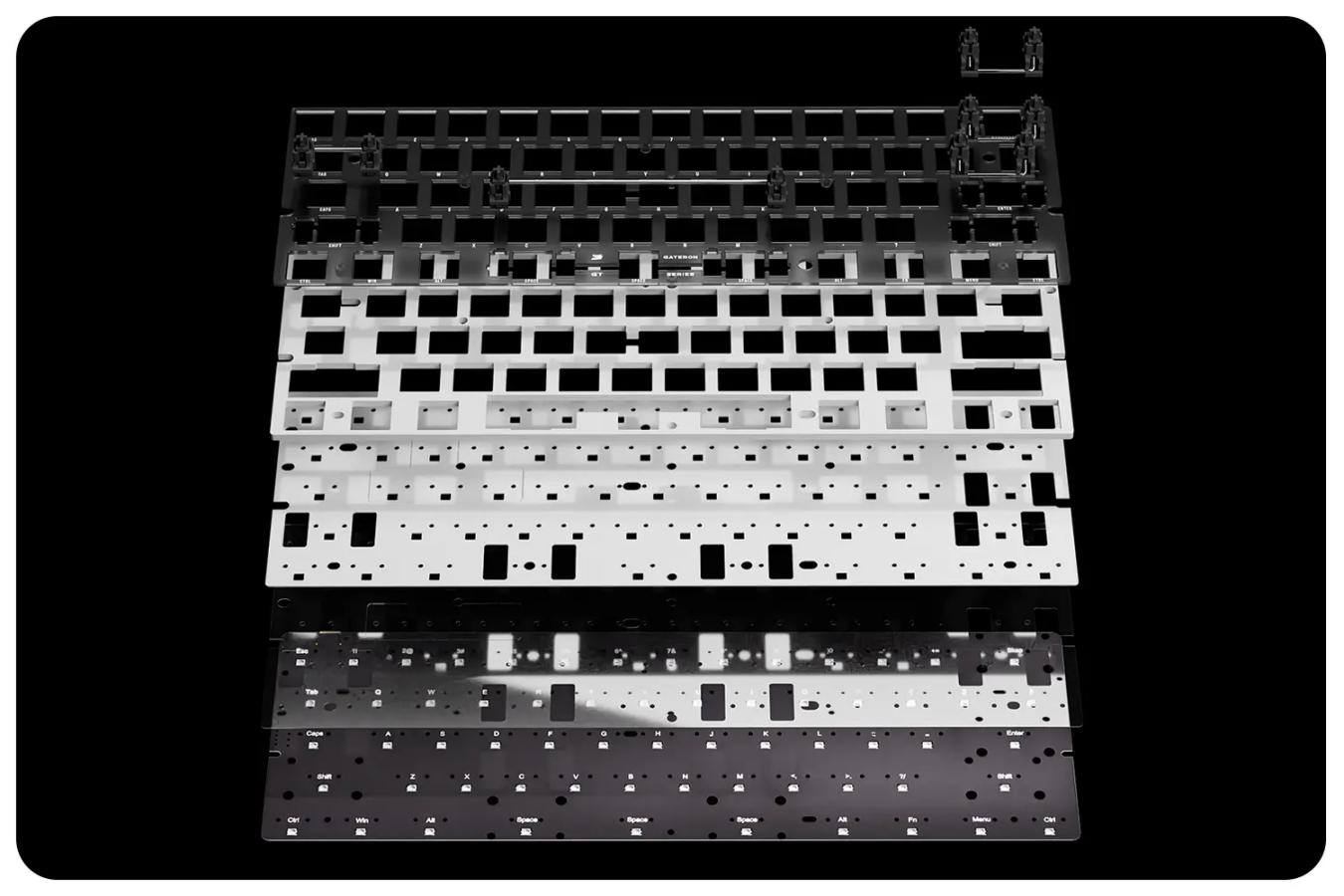
From Custom Switch Concept to Production
Developing Custom Keyboard Switches is ultimately a balance between user experience and manufacturability. Force curves, travel, materials, spring geometry, acoustics, RGB requirements, and tolerances all need to work as one system.
At GATERON, our role is to connect those design requirements with switch engineering, tooling, sampling, validation, and scalable manufacturing.
For keyboard brands evaluating a new Custom Keyboard Switch project, visit GATERON.com to explore existing mechanical and magnetic switch technologies or discuss how a switch specification can be developed into a production-ready solution.
FAQs
Q1. Does GATERON provide Custom Keyboard Switches for OEM brands?
Yes. GATERON states that it supports customized switch solutions and works with keyboard brands on customized products, supported by in-house R&D, mold making, and production capabilities.
Q2. What can be customized in GATERON Custom Keyboard Switches?
Depending on the project, customization may involve switch type, operating force, spring design, travel, materials, colors, lubrication, acoustics, lighting structure, and branding elements.
Q3. Can GATERON customize switch operating force?
Yes. Operating force can be influenced through spring weight, spring length, preload, and switch geometry. OEM development should evaluate the complete force curve rather than operating force alone.
Q4. Can GATERON develop magnetic Custom Keyboard Switches?
GATERON designs and manufactures magnetic switches in addition to mechanical and optical switches. Magnetic switch projects require coordination between the switch, magnet, Hall sensor, PCB, firmware, and actuation range.
Q5. What materials does GATERON use for keyboard switches?
GATERON uses materials including POM, nylon, and polycarbonate across different switch platforms. For example, the GATERON Smoothie Linear Switch uses a full-POM construction.



