When examining Tactile Standard Profile Switches, the spring component is seldom the focus, but perhaps even more than the construction of the switch, the spring defines the character, feel, response, and longevity of the switch. In terms of mechanical keyboard design, the spring acts as a system for suspending the stroke of each switch. This article will focus on the design and engineering of modern switch springs, employing the GATERON Baby Kangaroo 2.0 Tactile Switch Set as an example to explain how material choice, structural design, and surface finish design affect the tactile response.
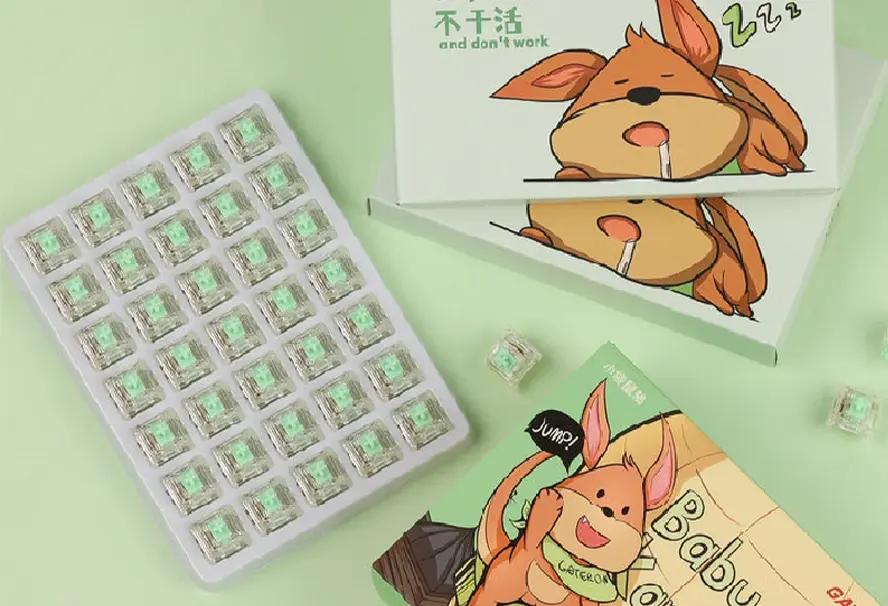
The Function of a Spring in a Tactile Standard Profile Switch
Before going to the specifics of design and technology employed, it is useful to give the reader an understanding of the role of a spring in a Tactile Standard Profile Switch. The spring provides the resistance feel and the returning force of the switch to its original position. In tactile switches, the design of the stem's tactile bump, in conjunction with the spring, provides the tactile bump feedback. The design and engineering of the spring provide the necessary keystroke feel, response, and predictability, whether the user is composing a word processing document or performing keystrokes for a gaming macro.
Having a spring in a switch serves to:
- Provide returning force to the original position
- Absorb the impact of bottoming out (also beneficial to the switch and user)
- Provide consistency of the feel among switches in a batch (minimized variation).
Double-stage Springs: The Engineering Behind Quick Returns
Introducing double-stage (or dual-stage) springs logically falls into one of the greatest innovations in a modern Tactile Standard Profile Switches. Whereas standard single-stage springs feature an even coil density throughout their length, double-stage springs divide the coils into two sections of variable density.
Featured in the GATERON Baby Kangaroo 2.0 is a 22mm double-stage spring with gold plating and a design that offers a variety of benefits:
1.Two-stage progressive resistance:
With two distinct coil sections, the first stage of the spring has lower resistance and the second section has higher resistance and therefore, provides a more controlled rebound when the key is fully depressed.
2.Faster key return and reduced key wobble:
The design of two-stage springs helps to absorb the shock normally experienced with a single-stage spring and reduces key wobble. Together these factors promote confidence in key actuation.
3.Increased feedback:
Further improvement is seen in tactile feedback. For a tactile switch, a double-stage spring returns from actuation with more force, and the pronounced tactility of the bump is even more defined.
4.Reduced spring force variance:
In double stage spring design, the force tolerance of the springs is greatly reduced. So, the actuation force for each switch is more consistent than for other switches, resulting in the feel of the whole keyboard being more uniform.
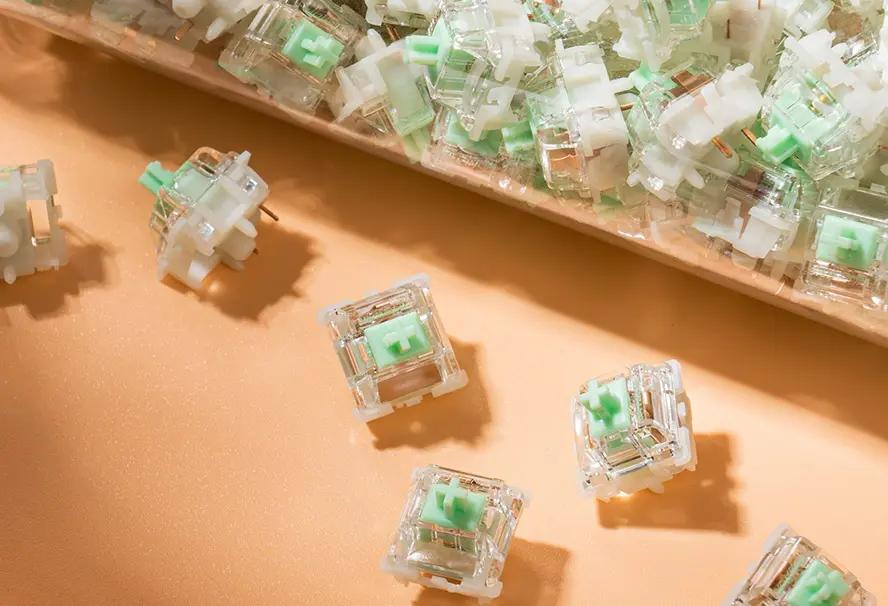
Material Matters: Why SUS304 High-Hardness Steel
The spring material and design have an equally important role to play in the performance. The spring in the GATERON Baby Kangaroo 2.0 is made with SUS304 high-hardness material. SUS304, a grade of stainless steel, has superior characteristics of integrity and mechanics.
1.Durability and Resilience
The high tensile strength and fatigue resistance of SUS304 gives the spring an almost unlimited number of compression cycles. This is especially important for springs in switches rated for tens of millions of actuations.
2.Full Resilience and Rigidity
The material gives "full resilience and rigidity" to the spring, allowing it to fully return to its original length after each compression. This rigidity is very important, because if it were to "sag," the desired feel of the spring would be lost and would instead be soft and inconsistent.
3.Corrosion Resistance
SUS304 offers decent corrosion resistance, but the Baby Kangaroo 2.0 offers even more with additional surface treatment.
Gold Plating: More Than Just Aesthetics
There is gold plating on the springs of the GATERON Baby Kangaroo 2.0, and there are many reasons for this aside from it looking nice.
1.Oxidation and Corrosion Resistance:
Thanks to the gold layer, the surfaces of the spring are protected from oxidation and corrosion. If the springs had no coating, the friction on the surface would increase and cause the springs to fail due to the inconsistent forces, the bare metal would be exposed to moisture and the air.
2.Consistent conductivity:
Gold spring plating is the perfect solution because of gold's reliability of conductivity. Even though the spring as a whole isn't the main electrical pathway in a switch, gold plating the spring and the contacts allows for reliable conductivity. In addition, plating the spring protects it from corrosion which could impact the electrical operation of the switch.
3.Extended lifespan:
Gold plating the spring and contacts helps the switch as a whole to stand the test of time. The Kangaroo 2.0 has an impressive 80 million presses rating showing how the internal parts of the switch are built to last.
4.Reduced Friction:
The smoother a metal's surface is, the less friction it has. Gold, being a smooth metal, decreases the friction between the spring and stem/housing. This makes the key press feel better.
Spring Design and the Resulting Feel Consistency
Feel consistency is very important to the quality of a Tactile Standard Profile Switch and is accounted for in the design of the Baby Kangaroo 2.0, where a switch with 1 key can feel heavier than a switch with another.
1.Tighter Spring Force Tolerance:
The force spring tolerance is much tighter in the Baby Kangaroo 2.0 versus many others which means that the operating force of each switch in the set is 59±8gf.
2.22mm Length for Stability:
Compared to shorter springs, longer 22mm springs provide more consistent force throughout the travel distance and reduce the "dead zone" feel that shorter springs cause.
3.Double-Stage Geometry:
In a 2-stage spring, the 1st stage finishes compressing the spring and causes the spring to enter the 2nd stage, where resistance remains consistent until fully compressed. The lack of resistance spikes and dips in the 2nd stage makes the spring easy to compress.
4.Factory Pre-Lubrication:
The factory pre-lubricated spring reduces friction amongst the spring coils and the spring itself and the switch components. This lubrication improves the feel consistency of the spring and reduces spring "ping" noise.
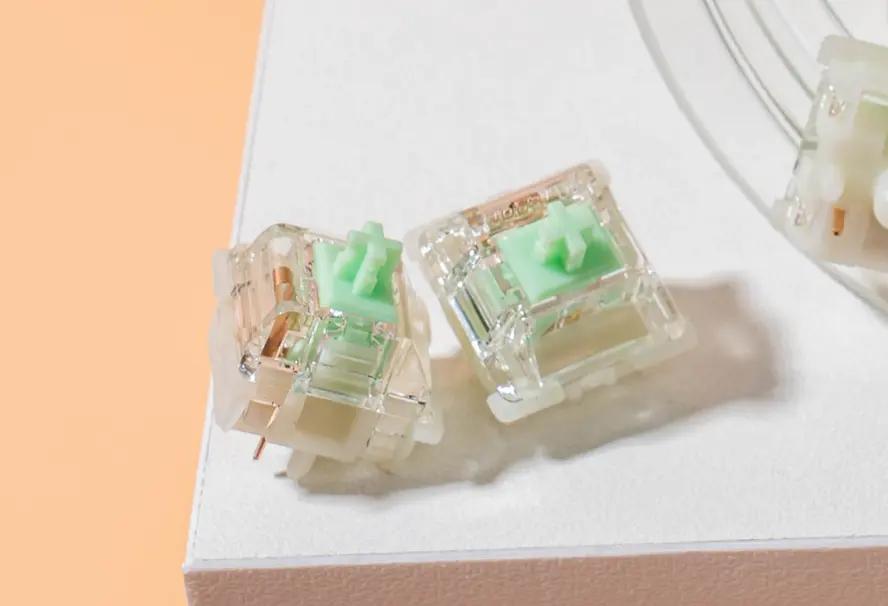
The Baby Kangaroo 2.0 Spring in Context
To analyze the Baby Kangaroo 2.0 spring, consider its specs as they relate to Tactile Standard Profile Switches.
|
Specification
|
Baby Kangaroo 2.0
|
Tactile Switch
|
|
Spring Type
|
22mm double-stage
|
15-18mm single-stage
|
|
Material
|
SUS304 Gold Plated
|
Stainless Steel (varies)
|
|
Operating Force
|
59±8gf
|
45-60gf
|
|
Total Travel
|
3.4mm
|
4.0mm
|
|
Pre-Travel
|
2.0±0.5mm
|
2.0mm
|
With a total travel distance of 3.4mm, Baby Kangaroo 2.0 features a distinctly compact, rapid keystroke when compared to the traditional 4.0mm travel switches. The tactile bump of Baby Kangaroo 2.0 is more pronounced and occurs at a 0.5mm travel distance, whereas the peak of most tactile switches occurs between 1.0 - 1.5mm and is less noticeable.
Practical Implications for Users
The following characteristics of Baby Kangaroo 2.0 spring design may help consumers of Tactile Standard Profile Switches with their purchasing decisions.
For typists:
Double-stage springs help typists achieve speed and accuracy. Baby Kangaroo 2.0 operating force of 59gf helps typists avoid bottoming out without causing fatigue.
For gamers:
Double-stage springs boost the rapid keystrokes that can help you achieve victory. Baby Kangaroo 2.0 features a consistent tactile feel that is desirable in a competitive environment.
For enthusiasts:
The thoughtful and innovative design of a double-stage spring combined with SUS304 gold-plated springs is a highly engineered option with superior feel and consistency for the most discerning consumers.
Conclusion
A Tactile Standard Profile Switch spring is more than just an engineered metal coil. GATERON Baby Kangaroo Switch 2.0 shows that today's switch springs are more advanced than just metal. Using SUS304 steel with a double-stage design creates a high-quality spring that is also gold plated, allowing for a more satisfying switch and a better typing experience.
Springs like the 22mm double-stage gold-plated provide a superior tactile experience by offering a quick return, minimal wobble, less deviated and consistent force, and an expected long lifespan. Recognizing the spring function may show newcomers and experts alike why a switch is a quality one, and offer a greater appreciation for Tactile Standard Profile Switches.
FAQs
Q1: What does double-stage spring mean?
A: A spring that has coils of two different specifications which leads to less resistance on top and more resistance on the bottom with a faster, more responsive return.
Q2: Why use gold plating on switch springs?
A: Gold plating offers a lubricant and a protective layer for the spring inside the switch.
Q3: Does spring design affect the feel over time?
A: Springs that are more uniform will lead to a switch that has a more uniform feel with regard to the forces that are applied when the switch is actuated.
Q4: Do springs that are longer, like the 22mm, give a better feel?
A: In general, longer springs can provide a more balanced feel that can help improve the feel of the switch. Typists might even notice the opposite experience.
Q5: Will these springs provide a usability of millions of keystrokes?
A: When used normally, gold SUS304 stainless steel switches will exceed 80 million keystrokes.



