Introduction: The Rise of the Sound Test
In the mechanical keyboard community, Sound Test Mechanical Switches have gone from an intriguing novelty to one of the main elements in a purchase decision. What used to be a quick quality assessment is now a systematic approach to an acoustic analysis that indicates to consumers what typing, gaming, and work switches are most compatible, as well as which switch is best for the environment. However, do all switches sound different and what is measured in a sound test?
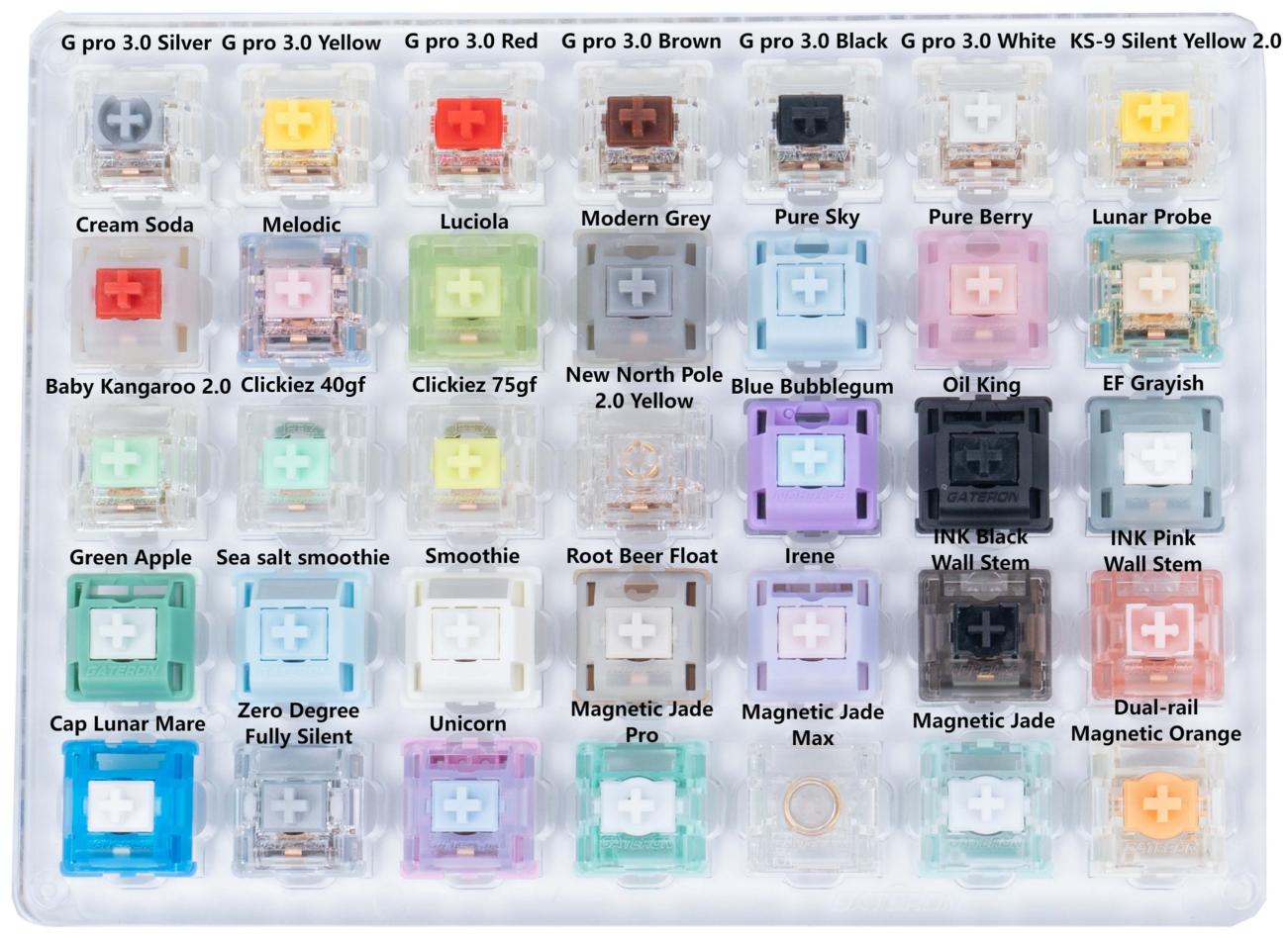
With an answer comprised of many moving parts, including the type of materials used, mechanical design, and the precision of manufacturing, you may find that you are employing a bit of an educated guess. As GATERON—a professional manufacturer specializing in micro switches, mechanical keyboard switches (including mechanical switches, optical switches, and magnetic switches), as well as waterproof switches—demonstrates through its vertically integrated production, the sound of a switch is not accidental. It is engineered.
What a Sound Test Mechanical Switches Actually Measures
A Sound Test Mechanical Switches is far more than a casual listening exercise. From GATERON's perspective, a sound test is a structured listening method designed to judge three practical things:
- Smoothness noise: The friction sounds generated as the stem travels along the housing rails during a keypress.
- Housing resonance: The vibration and echo produced by the switch housing itself when the stem impacts the top or bottom.
- Consistency across presses: switches show a level of manufacturing consistency when they produce an identical acoustic signature with every keystroke.
Sound tests of magnetic switches are particularly interesting because these switches actuate via Hall effect sensing, which means these switches make no contact when they actuate. For these types of switches, sound can tell you more about stability, lubrication, and bottom-out tuning than any spec sheet.

The Four Sound Zones of a Key Press
An extensive Sound Test Mechanical Switches records a single keypress and analyzes sound across four unique zones, each of which suggests a different mechanical component:
- Start (top-in): This zone refers to the presence of dry friction, or a key press observed to be "sandy."If the first 1-2mm of travel is rough, the housing may be paired with a stem that is not designed to slide.
- Mid-travel: Sound in the mid-travel of a keypress should be even and consistent. Anomalous sounds, such as ticks or scraping, suggest travel containment issues.
- Bottom-out: Length of travel and the stiffness of the housing and plate/case resonances will affect the bottom-out signature.
- Return (upstroke): Sound or lack thereof in the return stroke may indicate an offset or poor quality spring, or the housing may be paired with a stem that is designed to slide. A signature bottom-out will be less exciting with a noisy return.
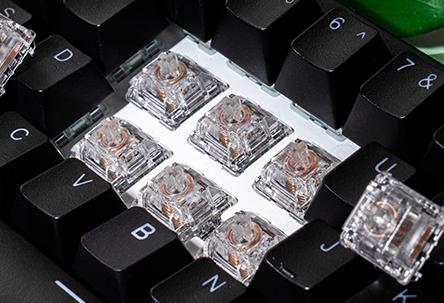
Why Mechanical Switches Sound Different: The Key Factors
1.Housing Material
Acoustic signatures of a mechanical switch will be most notably affected by the housing material:
- Nylon housings will absorb some of the higher frequencies of the acoustic signature when a switch is pressed, while a greater signature may occur with a PC (Polycarbonate) housing.
- POM (Polyoxymethylene) generates self-lubricating layers which leads to decreased friction, creating a smoother and generally bassier acoustic profile.
2.Stem Design and Material
The stem is the moving component that is contained in the housing:
- The material the stem is made from contributes to the hardness and elasticity, which in turn affects the speed of rebound and the sound produced.
- Clicky switches use a more complex stem design, which provides both tactile and auditory feedback when pressed.
- Silent switches use damping materials—such as rubber or silicone—on the stem to eliminate both top-out and bottom-out sounds.
3.Spring Characteristics
The spring influences not only feel but also sound:
- Thinner gauge springs tend to produce more "ping"—the metallic resonance that occurs when the spring vibrates.
- Spring length and tension affect rebound speed and the character of the upstroke sound.
Lubrication
Factory pre-lubrication has become a defining feature of modern switches:
- Proper lubrication reduces high-frequency scratch noise and improves recording "cleanliness".
- GATERON's factory pre-lubed switches deliver a smooth, low-friction experience from the moment they are removed from packaging.
How to Conduct a Fair Sound Test
To make a Sound Test Mechanical Switches meaningful, controlling variables is essential:
- Use the same keyboard, plate, and foam configuration for all comparisons. A keyboard case is an amplifier and can completely change what you hear.
- Use one keycap set for all recordings. Keycaps can shift pitch significantly.
- Record at the same distance and angle every time.
- Type three ways: light taps, normal typing, and firm bottom-out.
- Record both single-key presses and short paragraphs—real-world use matters.
When these conditions are met, the differences you hear are much more likely to come from the switch itself, not from the case or microphone placement.
GATERON's Design and Technology Advantages
GATERON Electronic Technology Co., Ltd (GATERON) stands apart as a professional manufacturer with full independent research and development, in-house mold making, and complete end-to-end production capabilities. The result of this vertical integration is top-tier acoustic quality.
1.POM Construction Focused on Sound Integrity
GATERON's Full POM Smoothie Switches Series utilizes POM based designs for the housing, stems, and switches for 100% POM construction:
- The focus on single-material construction builds uniform surfaces and ensures that the sound and feel of the switches do not change over millions of keystrokes.
-
POM being a self-lubricating material means that the sound and switch feel are consistent, even without lubing.
- You can expect the same performance quality in the third year as the first.

2.Dual-Layer Mute Technology for Silence
GATERON's silent switches introduce a dual-layer mute mechanism of innovative design:
- Rebound double shoulder mute pads eliminate the high frequency noise that occurs when the switch returns to the rest position.
- The touch mute pads mute the switch at the bottom which also prevents bottom-out noise and creates a firm tactile feedback.
- The double rail stability structure eliminates any mushiness while providing a completely stable keypress.
Engineering the solution for noise focuses on the cause of the issue, rather than a bandaid.
3.Gold-Contact Reliability
Vulcanization and POM Stems are a thing of the past with GATERON's gold-alloy leaf contacts:
- The combination of gold contacts and POM stems is rated for 100 million cycles.
- This ensures consistent sound and function for the lifetime of the switch.
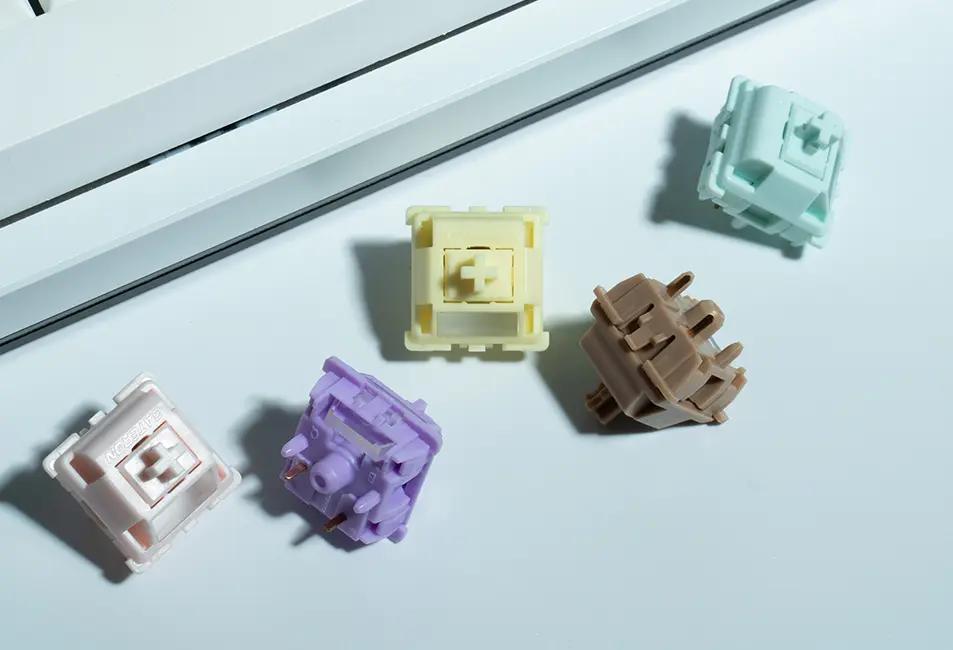
Quality Control and Universal Diagnostic
GATERON enforces an extreme quality control system and Universal Diagnostic for all manufacturing steps:
- Every switch is tested for sound and function before leaving the factory.
- With ISO 9001, UL, and IATF 16949 certifications, the commitment to quality from the company can be validated.
- This approach means that the sound you hear in a Sound Test Mechanical Switches is the sound you will hear in that sound during everyday use.
Conclusion: Sound Is Engineered, Not Accidental
The Sound Test Mechanical Switches is key to the understanding and choosing of keyboard switches. The differences in switch sound come from the choice of materials, the precision of the construction, and the design.
GATERON shows that full POM construction, dual-layer mute, gold contacts, and 100% quality control guarantee that premium sound is a goal of the design. The sound that a switch makes can be a design goal that is just as valid, whether the sound is a crisp clack, smooth thock, or is nearly silent. Knowing the design goal and purpose can help improve your choice of switch.
The mechanical keyboard market is edging closer to a value of $2.04 billion in 2026, and the importance of the Sound Test Mechanical Switches is only going to grow. With GATERON leading the field of Sound engineering, that field will continue to innovate and give consumers a purpose built product.
FAQs
Q1: What is the mechanical switch sound test?
A: It is a test where all the sounds produced by a switch upon being pressed are played for an audience and they guess the sound that is produced by a switch being pressed.
Q2: What accounts for the differences in how keyboard switches sound?
A: Switches aren't the sole keyboard sound drivers. The sound profile is also produced by the design of the case and plate.
Q3: What are "thocks" and "clacks" in sound tests?
A: "Thock" sounds are low, deep, and more pitch centered. "Clack" sounds are more high and more acute. They are caused by the choice of the switch housing material and the plate housing material and the rigidity of the plate.
Q4: How does GATERON achieve consistent sound across all switches?
A: GATERON employs their own in-house switch housing molds and are in complete control of the switch sound. We also are ISO 9001 certified, and as such, are obligated to inspect the switches for sound and mechanical quality as well.
Q5: When it comes to sound, does the housing material or the stem design matter more?
A: Both matter. The material of the housing is responsible for the sound profile. The stem design determines the sound sharpness and friction and wobble.



