Introduction: Why Sound Tests Matter
The mechanical keyboard switch sound test has become an essential step for anyone choosing a keyboard. Sound reveals more than specifications ever can—it tells you about stability, lubrication quality, housing resonance, and consistency across repeated presses. Typing and mechanical keyboard connoisseurs will be most familiar with linear, tactile, and clicky switches categories. What may be less obvious is the typing experience with every category switches' acoustic signature.
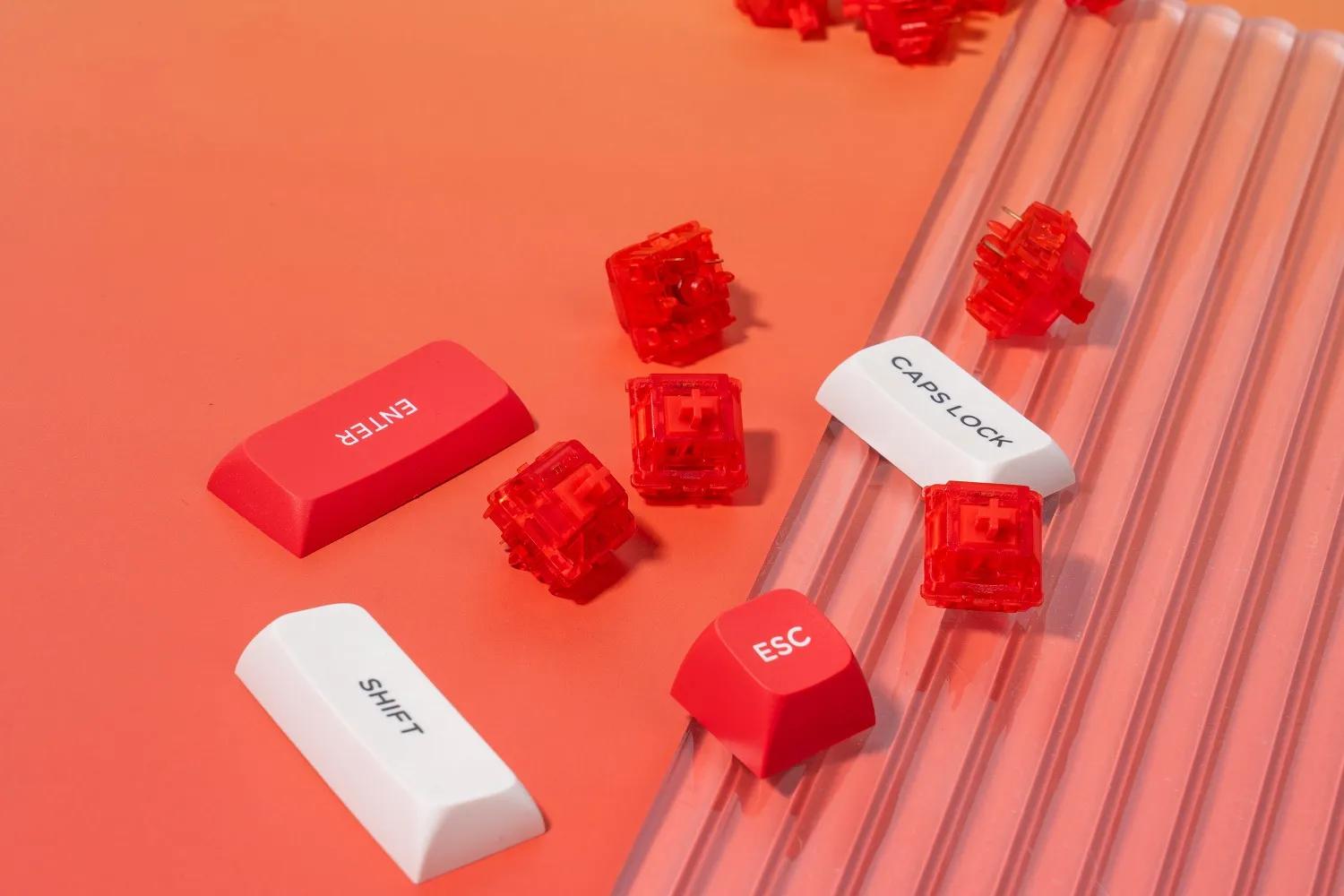
The guide outlines the differences in the Normal Profile Switch Sound Test so that you can appreciate and decide which category is best for your use.
What is a Normal Profile Switch?
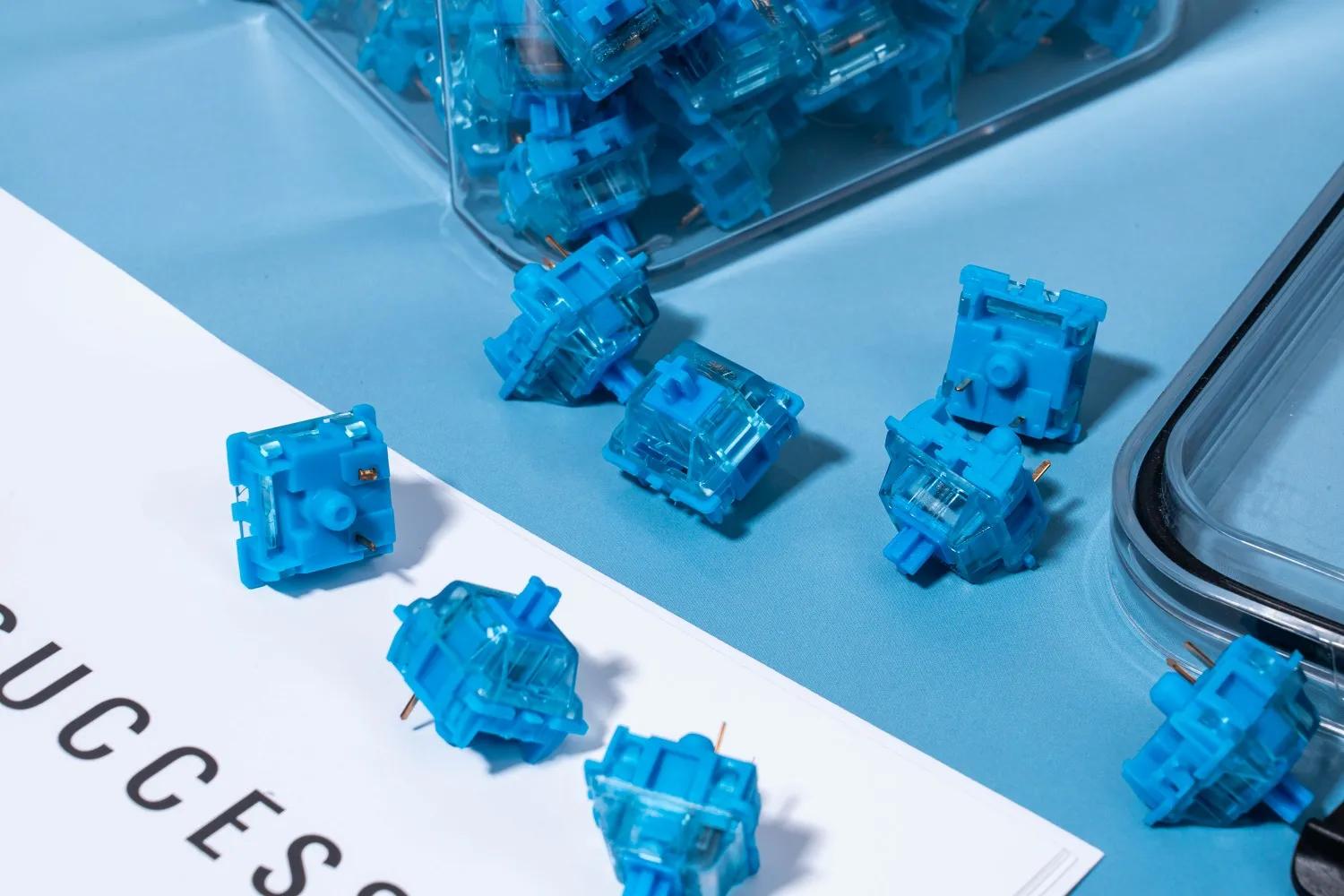
Normal Profile Mechanical Switches refer to standard switches that you would find on most mechanical keyboards. Compared to low-profile switches, which are about 30% to 40% shorter and diminish the travel distance, normal-profile switches retain the most consistent distance with the most controlled return.
Normal Profile Mechanical Switches exhibit the following:
- Normal Profile switches may be customized to require an actuation force of between 45g and 60g. The best options will feel neither too heavy nor too light.
- Normal Profile switches are designed to have a total travel distance of about 4mm.
- Because of their standard height, normal-profile switches are compatible with most keycaps and most popular layouts
- Normal switches may be tuned for sound & acoustic preference, whereas low-profile may be limited.
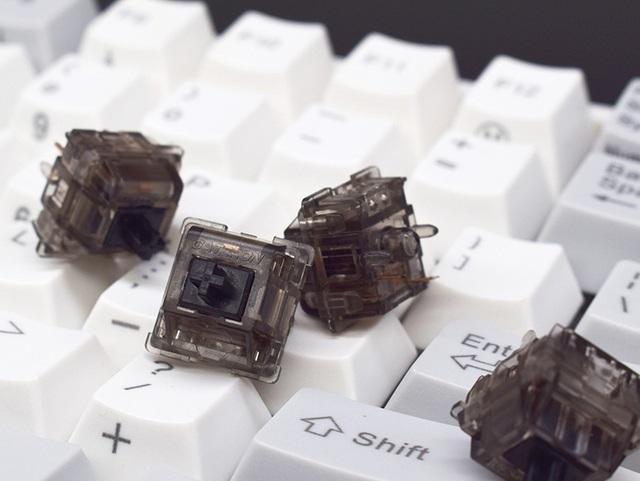
Overview of the Three Switch Types: A Sound Test
1. Linear Switches: Smooth and Silent
A Linear switch offers a smooth keystroke from start to finish. There are no bumps, no resistance, and no sounds of clicks. The resistance for Linear switches remains consistent through the entire keystroke, so many describe the experience of pressing a linear switch as "clean," "fluid," or "buttery."
What you hear in a linear switch sound test:
- The primary sound comes from bottom-out and top-out—the stem hitting the housing at the ends of travel.
- Without a click mechanism, linear switches produce the quietest operation among the three types.
- Quality linear switches produce a deep "thock" rather than a sharp "clack".
- Factory lubrication reduces high-frequency scratch and improves recording "cleanliness".
🔹 GATERON linear examples: The GATERON Oil King delivers a deep, satisfying sound profile with a nylon housing that eliminates ping. The GATERON Smoothie series uses full POM housing to reduce internal friction and produce a deep, buttery acoustic character.
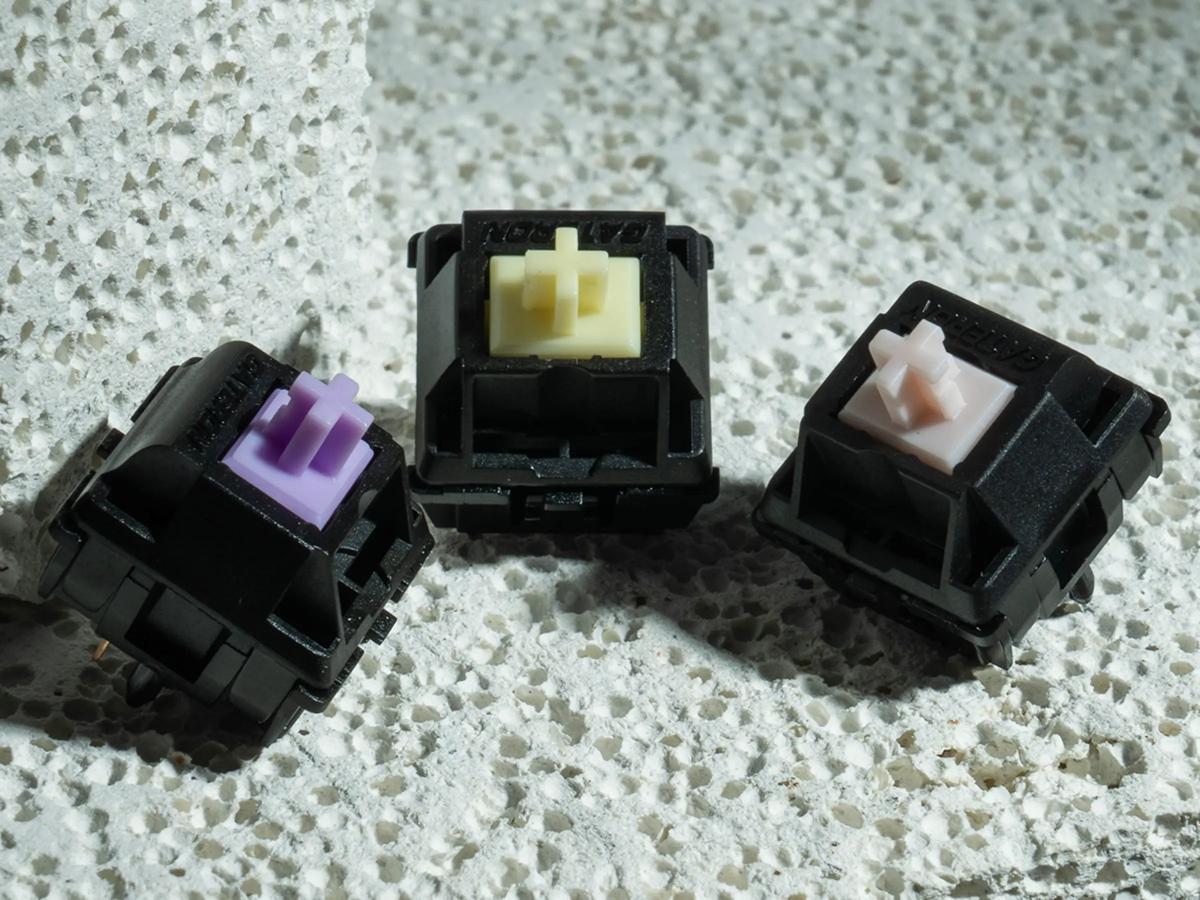
✅ Ideal for: Gamers looking for a fast switch and a reliably consistent typing experience, office workers in quiet environments, and everyone who prefers typing sounds that are more subtle.
2.Tactile Switch: Text Feedback, Without the Sound
Tactile switches offer a bump when the key is pressed down but are quieter than a click. The bump gives the user physical feedback that the key has been pressed without needing to bottom out.
In a tactile switch sound test, you hear:
- Tactile bump mechanisms give quieter feedback than the loud sound of clicky switches.
- Tactile switches often give leaf ping, a sound created by the contact leaf, which is typical of all tactile designs.
- Typing sound and key press sound are present, but they are more subdued than clicky switches.
- The housing material affects the typing sound the most. It can sound "marbly" or "clacky."
🔹 GATERON Baby Kangaroo 2.0: This switch is loud and has a tactile feedback bump that is close to instant. Users of the switch say the sound is soothing. The GATERON Quinn has a consistent tactile feedback sound that is also soothing when typing.
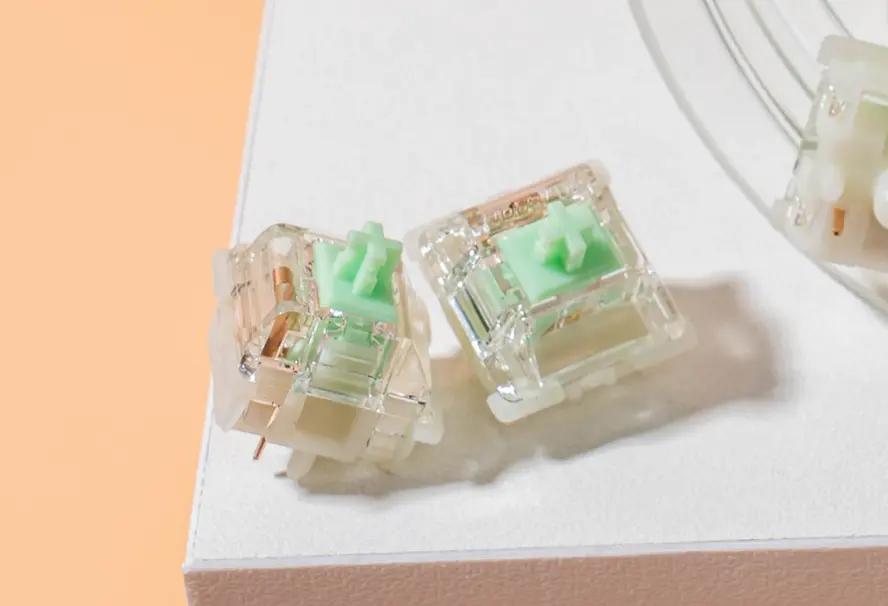
✅ Best For: Those who want tactile feedback typing for a quiet office. This category of switch is sound-friendly but is also great for gaming and typing.
3.Clicky Switch: Maximum Auditory Feedback
Clicky switches offer tactile feedback, as well as an actuation click sound, which creates a nostalgic typing experience.
What can be heard during a sound test for a clicky keyboard switch:
- During a sound test, you may hear separate click bottom-out noise. This noise may be produced from either a click jacket or click bar.
- Of all switches, clicky switches are the loudest and popular.
- During normal typing, sound levels can be from 60-70 decibels.
- Clicks during typing can help stimulate muscle memory and overall speed.
🔹 GATERON clicky examples: The GATERON Melodic is an example of a crispy click solution. The GATERON KS-9 Blue provides a classic clicky experience with a tactile bump and an auditory keystroke feedback. GATERON's INK series provides a clicky blue switch with a more refined percussion experience.

✅ Users who benefit the most: Hyper responsive users, people who enjoy a typing soundtrack, and people who have an auditory space they can type in.
Creating a Meaningful Normal Profile Switch Sound Test
In order for a sound test to be successful, conditions must be the same.
Sound test tips:
- Each iteration must be done with the same keyboard, keyboard plate/switch foam, and keyboard case (the case amplifies noise).
- Use a single keycap set for each sound test iteration, because keycaps can alter sound.
- Record at the same distance and angle every time.
- Test three typing styles: light taps, normal typing, and firm bottom-out.
- Record both single-key presses and a short paragraph—real use matters.
-
What to Listen for in Each Sound Zone
A useful Normal Profile Switch Sound Test listens to a press in four distinct zones.
- Start of press (top-in): Detects dry friction or "sandiness." Rough sounds in the first 1-2mm often indicate insufficient lubrication.
- Mid-travel: Sounds "stable"and "even". Random ticks or scraping indicate a wobble or misalignment.
- Bottom-out: The "signature"that most will focus on is clack vs thock or sharp vs soft. It is a function of the travel length, the rigidity of the housing, and plate resonance.
- Return: (upstroke) often is neglected; however, it is important. Upstroke noise can be housing echo, stem rebound or spring ping.
Choosing Depending on Your Environment
- Open office / shared workspace: For the quietest operation, linear switches are best. A moderate option are tactile switches.
- Home / private gaming setup: Feedback-wise, clicky switches are the best option, while a balanced option are tactile switches.
- Late-night use: Silent options within each category like the GATERON dual-layer mute pad technology can reduce noise while maintaining the responsiveness of the switch.
GATERON: Exceptional Engineering in Switch Design
GATERON Electronic Technology Co., Ltd. (GATERON) is a switch manufacturer as a profession who specialize in mechanical keyboard switches (both mechanical, optical and magnetic switches) as well as micro switches and also waterproof switches. From the start to the end of the production, we also have capability of in-house mold making.
- With the full implementation of a quality management system, GATERON guarantees that each process of production is 100% inspected and that the switches meet the quality requirements of clients.
- With certifications of ISO 9001, UL, and IATF 16949, GATERON can provide clients worldwide reliable solutions.
- With patented designs that set standards and innovative switch designs that are widely recognized, GATERON stands out as the leading switch manufacturer.
- The complete POM housing technology creates smoother and longer-lasting keystrokes by lessening friction and oxidation.
- Pre-lubrication eliminates ping and reduces high-frequency scratching which results in sound test recordings more free of noise.
- GATERON maintains long-term cooperation with domestic and international mechanical keyboard brands and continuously launches new product series, including professional DIY customized switch solutions.
- With rated lifespans of 50 million to 100 million+ keystrokes, GATERON switches deliver reliable, long-lasting performance.
Final Thoughts
The Normal Profile Switch Sound Test is your most reliable tool for choosing between linear, tactile, and clicky switches. Linear switches are smooth and quiet, making them excellent for gaming. They're also great for shared environments. Tactile switches have a good balance of feedback and noise, making them good for environments of all kinds. Clicky switches are great for people who want to hear and feel feedback for every keystroke, since they provide the most feedback and the loudest noise.
Since there are many types of switches, the best type ultimately comes down to the environment you're in, the style you type in, and the type you prefer. With manufacturers like GATERON, who provide ingenious designs for all switch types, excellent options are available to you.
Frequently Asked Questions
Q1: Does lubrication affect the sound of a standard profile switch?
A: Yes. Factory lubrication helps lower scratch and spring ping, while also helping high-frequency noise. Because of this, factory lubrication helps produce a deeper and cleaner sound.
Q2: In sound tests for switches, what is the difference between "thock" and "clack"?
A: The difference between "thock" and "clack" is the thock sound involves a deep and low sound, while a clack sound is a sharper and high sound.
Q3: How do standard profile switches and low-profile switches differ in sound?
A: Low-profile switches have a smaller chamber and a shorter travel distance which create a more high-pitched and softer sound. Conversely, standard profile switches create a sound that is more rich and full due to a longer travel distance and a larger chamber.
Q4: What do I need to pay attention to in a sound test of a standard profile switch?
A: There are four things you need to pay attention to in a sound test of a standard profile switch: top-in (scratch), mid travel (stability), bottom-out (pitch), and upstroke (spring echo). Pay attention to all of these to determine the quality of a switch.
Q5: Will GATERON switches, which claim to provide a better sound out-of-the-box, be factory-lubed?
A: Several GATERON switches, like the Oil King and Smoothie switches, are factory-lubed and provide a good sound quality while also reducing unwanted sounds.



